Este contenido aún no está optimizado para dispositivos móviles.
Para obtener la mejor experiencia, visítanos en una computadora de escritorio con un vínculo que te enviaremos por correo electrónico.
Overview
In this exercise, you deploy a Cloud Run service and use Eventarc to receive
events from Pub/Sub. In the second part of the lab, you do the same on an
Anthos GKE cluster with the Cloud Run for Anthos offering.
Objectives
In this lab, you learn how to:
Deploy an event receiver service to Cloud Run and Cloud Run for Anthos.
Create an event trigger with Eventarc.
Publish a message to a Pub/Sub topic to generate an event, and view it in the
Cloud Run and Cloud Run for Anthos logs.
Setup and requirements
For each lab, you get a new Google Cloud project and set of resources for a fixed time at no cost.
Sign in to Google Skills using an incognito window.
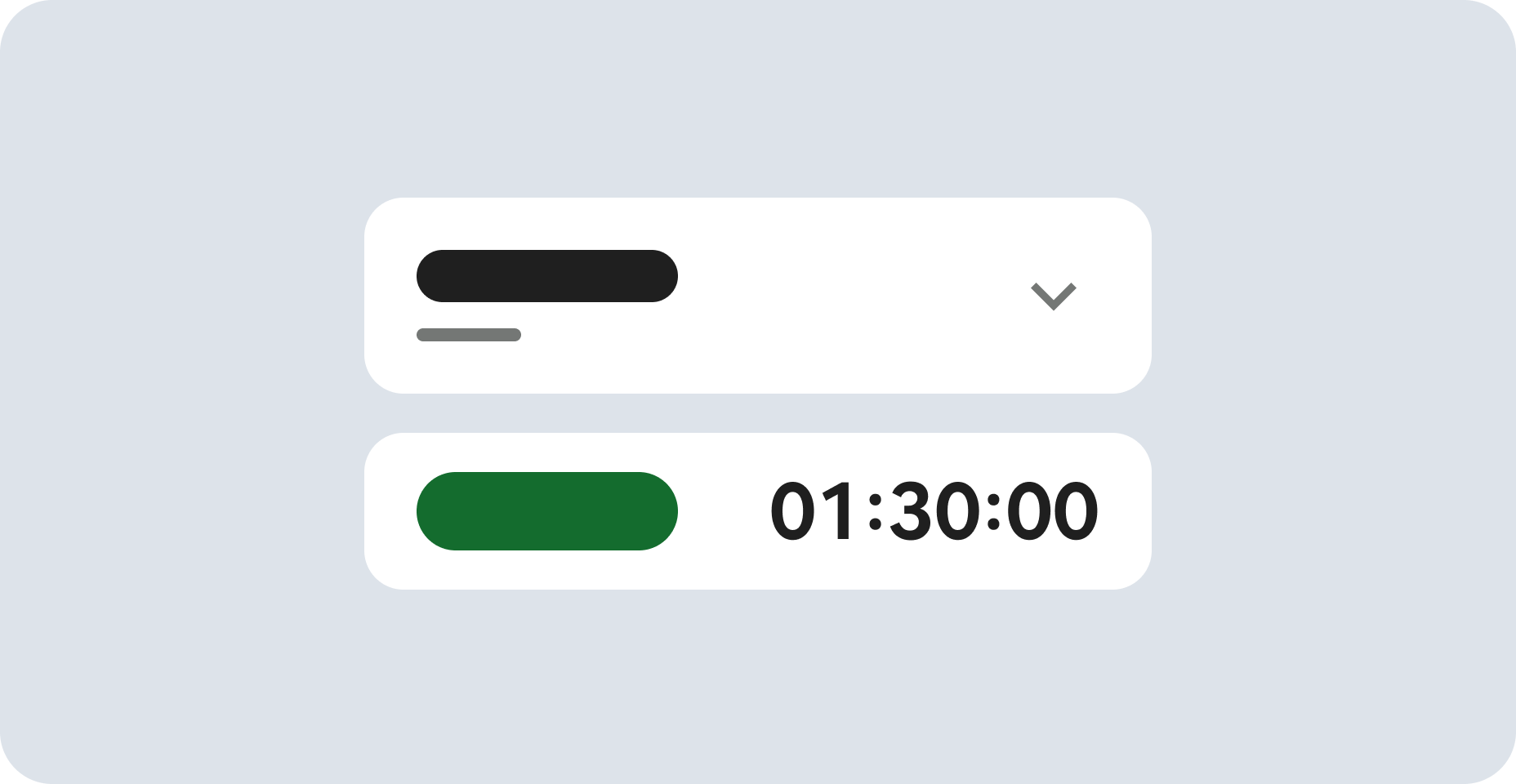
Note the lab's access time (for example, 1:15:00), and make sure you can finish within that time.
There is no pause feature. You can restart if needed, but you have to start at the beginning.
When ready, click Start lab.
Note your lab credentials (Username and Password). You will use them to sign in to the Google Cloud Console.
Click Open Google Console.
Click Use another account and copy/paste credentials for this lab into the prompts.
If you use other credentials, you'll receive errors or incur charges.
Accept the terms and skip the recovery resource page.
Task 1. Review your Anthos GKE cluster and install Cloud Run for Anthos
In this task, you review and prepare the already created Anthos GKE cluster to
execute Cloud Run for Anthos. First, you verify that the GKE cluster has been
registered in an Anthos Fleet. Second, you confirm that Anthos Service Mesh has
been installed in the cluster as a prerequisite to installing Cloud Run for
Anthos. Third, you enable and install Cloud Run for Anthos in the cluster.
In the Google Cloud Console, on the Navigation menu
(), click Kubernetes Engine > Clusters.
Notice that a new GKE cluster has been created.
Click Workloads, and verify that the cluster is running the Anthos
Service Mesh components istio-ingressgateway and istiod-asm.
On the Navigation menu, click Anthos > Clusters, and then verify that the
cluster has been registered and appears in the list of Anthos managed clusters.
Click Activate Cloud Shell (). If
prompted click Continue.
In Cloud Shell, set the Zone environment variable:
C1_ZONE={{{ project_0.default_zone| "Zone added at lab start" }}}
In Cloud Shell, initialize the environment variables:
export PROJECT_ID=$(gcloud config get-value project)
export C1_NAME="gke"
gcloud config set run/region us-central1
gcloud config set run/platform managed
gcloud config set eventarc/location us-central1
If this step fails, wait 30 seconds and try again.
Note: Enabling Cloud Run for Anthos takes several
minutes; continue with the next task. Later, you review whether the
installation has been successful.
Task 2. Deploy a Cloud Run application
In Cloud Shell, clone the repository:
git clone https://github.com/GoogleCloudPlatform/nodejs-docs-samples.git
cd nodejs-docs-samples/eventarc/pubsub/
This creates a new Pub/Sub topic and a trigger for it called
events-pubsub-trigger. The Pub/Sub subscription persists regardless of
activity and does not expire.
Confirm that the trigger was successfully created:
gcloud eventarc triggers list --location=us-central1
Find and set the Pub/Sub topic as an environment variable:
This creates a new Pub/Sub topic and a trigger for it called
pubsub-trigger. The Pub/Sub subscription persists regardless of
activity and does not expire.
Confirm that the trigger was successfully created:
gcloud eventarc triggers list --location=us-central1
Find and set the Pub/Sub topic as an environment variable:
Send a message to the Pub/Sub topic to generate an event:
gcloud pubsub topics publish $RUN_TOPIC --message "Cloud Run on Anthos"
The event is sent to the Cloud Run for Anthos service, which logs the event
message.
To view the event message in the service logs, on the
Navigation menu, click Kubernetes Engine > Applications.
Click on Go to List of Services.
Click on the subscriber-service.
On the Logs tab, look for the "Hello, Cloud Run on Anthos!" message.
Congratulations! You deployed a Cloud Run for Anthos
application and used Eventarct to trigger events from Pub/Sub.
End your lab
When you have completed your lab, click End Lab. Google Skills removes the resources you’ve used and cleans the account for you.
You will be given an opportunity to rate the lab experience. Select the applicable number of stars, type a comment, and then click Submit.
The number of stars indicates the following:
1 star = Very dissatisfied
2 stars = Dissatisfied
3 stars = Neutral
4 stars = Satisfied
5 stars = Very satisfied
You can close the dialog box if you don't want to provide feedback.
For feedback, suggestions, or corrections, please use the Support tab.
Copyright 2026 Google LLC All rights reserved. Google and the Google logo are trademarks of Google LLC. All other company and product names may be trademarks of the respective companies with which they are associated.
Los labs crean un proyecto de Google Cloud y recursos por un tiempo determinado
.
Los labs tienen un límite de tiempo y no tienen la función de pausa. Si finalizas el lab, deberás reiniciarlo desde el principio.
En la parte superior izquierda de la pantalla, haz clic en Comenzar lab para empezar
Usa la navegación privada
Copia el nombre de usuario y la contraseña proporcionados para el lab
Haz clic en Abrir la consola en modo privado
Accede a la consola
Accede con tus credenciales del lab. Si usas otras credenciales, se generarán errores o se incurrirá en cargos.
Acepta las condiciones y omite la página de recursos de recuperación
No hagas clic en Finalizar lab, a menos que lo hayas terminado o quieras reiniciarlo, ya que se borrará tu trabajo y se quitará el proyecto
Este contenido no está disponible en este momento
Te enviaremos una notificación por correo electrónico cuando esté disponible
¡Genial!
Nos comunicaremos contigo por correo electrónico si está disponible
Un lab a la vez
Confirma para finalizar todos los labs existentes y comenzar este
Usa la navegación privada para ejecutar el lab
Usar una ventana de incógnito o de navegación privada es la mejor forma de ejecutar
este lab. Así evitarás cualquier conflicto entre tu cuenta personal
y la cuenta de estudiante, lo que podría generar cargos adicionales en
tu cuenta personal.
Build, deploy, and execute a containerized application in Google Cloud Run and Cloud Run for Anthos and leverage Eventarc to receive Pubsub messages.
Duración:
49 min de configuración
·
Acceso por 90 min
·
90 min para completar


 ), click Kubernetes Engine > Clusters.
Notice that a new GKE cluster has been created.
), click Kubernetes Engine > Clusters.
Notice that a new GKE cluster has been created. ). If
prompted click Continue.
). If
prompted click Continue.