始める前に
- ラボでは、Google Cloud プロジェクトとリソースを一定の時間利用します
- ラボには時間制限があり、一時停止機能はありません。ラボを終了した場合は、最初からやり直す必要があります。
- 画面左上の [ラボを開始] をクリックして開始します


This lab shows you how to use DNNs in TensorFlow for content-based filtering.
In this lab, you learn to perform the following tasks:
tf.feature_column.In this lab, you build a deep neural network (DNN) to make content-based recommendations. Content-based filtering uses features of the items and users to generate recommendations. In this example, you make recommendations for users on the Kurier.at news site. To do this, you use features based on the news text, title, author, and recency of the article.
For each lab, you get a new Google Cloud project and set of resources for a fixed time at no cost.
Sign in to Google Skills using an incognito window.
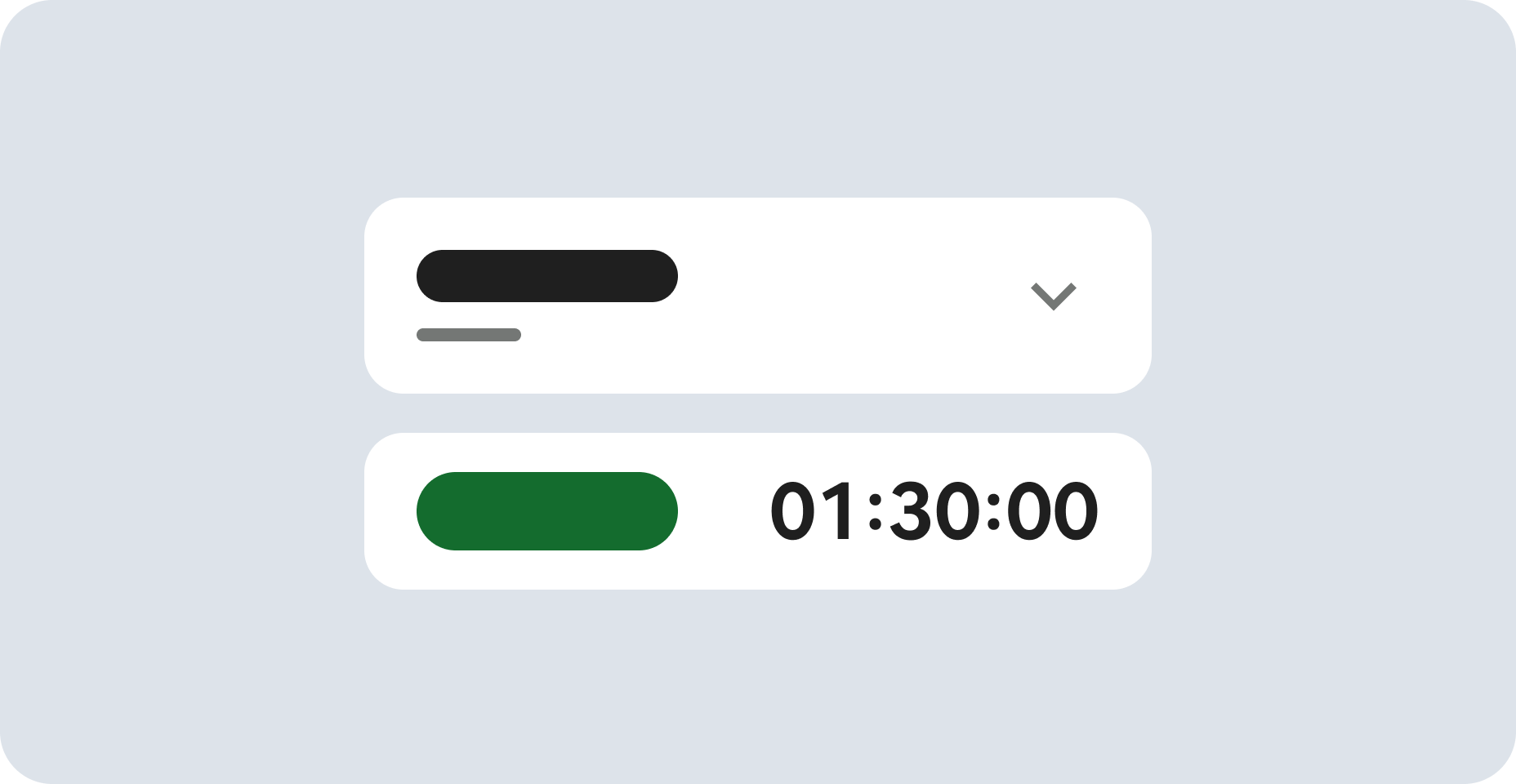
Note the lab's access time (for example, 1:15:00), and make sure you can finish within that time.
There is no pause feature. You can restart if needed, but you have to start at the beginning.
When ready, click Start lab.
Note your lab credentials (Username and Password). You will use them to sign in to the Google Cloud Console.
Click Open Google Console.
Click Use another account and copy/paste credentials for this lab into the prompts.
If you use other credentials, you'll receive errors or incur charges.
Accept the terms and skip the recovery resource page.
In the Google Cloud Console, on the Navigation menu (
Click + Create.
Type a unique name for your bucket, such as your project ID.
Click Create.
Confirm Enforce public access prevention on this bucket on "Public access will be prevented" pop-up.
In the Google Cloud Console, on the Navigation Menu, click Vertex AI > Workbench. Select User-Managed Notebooks.
On the Notebook instances page, Click Create New and choose the latest version of TensorFlow Enterprise 2.6 (with LTS) in Environment.
In the New notebook instance dialog, confirm the name of the deep learning VM, if you don’t want to change the region and zone, leave all settings as they are and then click Create. The new VM will take 2-3 minutes to start.
Click Open JupyterLab.
A JupyterLab window will open in a new tab.
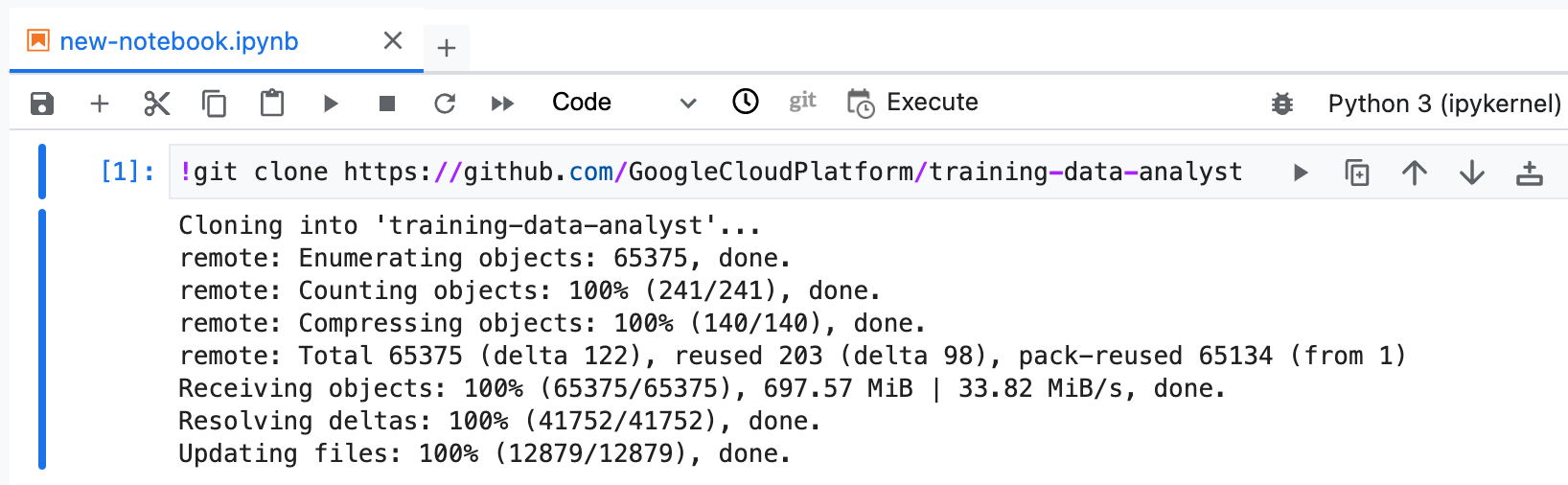
The GitHub repo contains both the lab file and solutions files for the course.
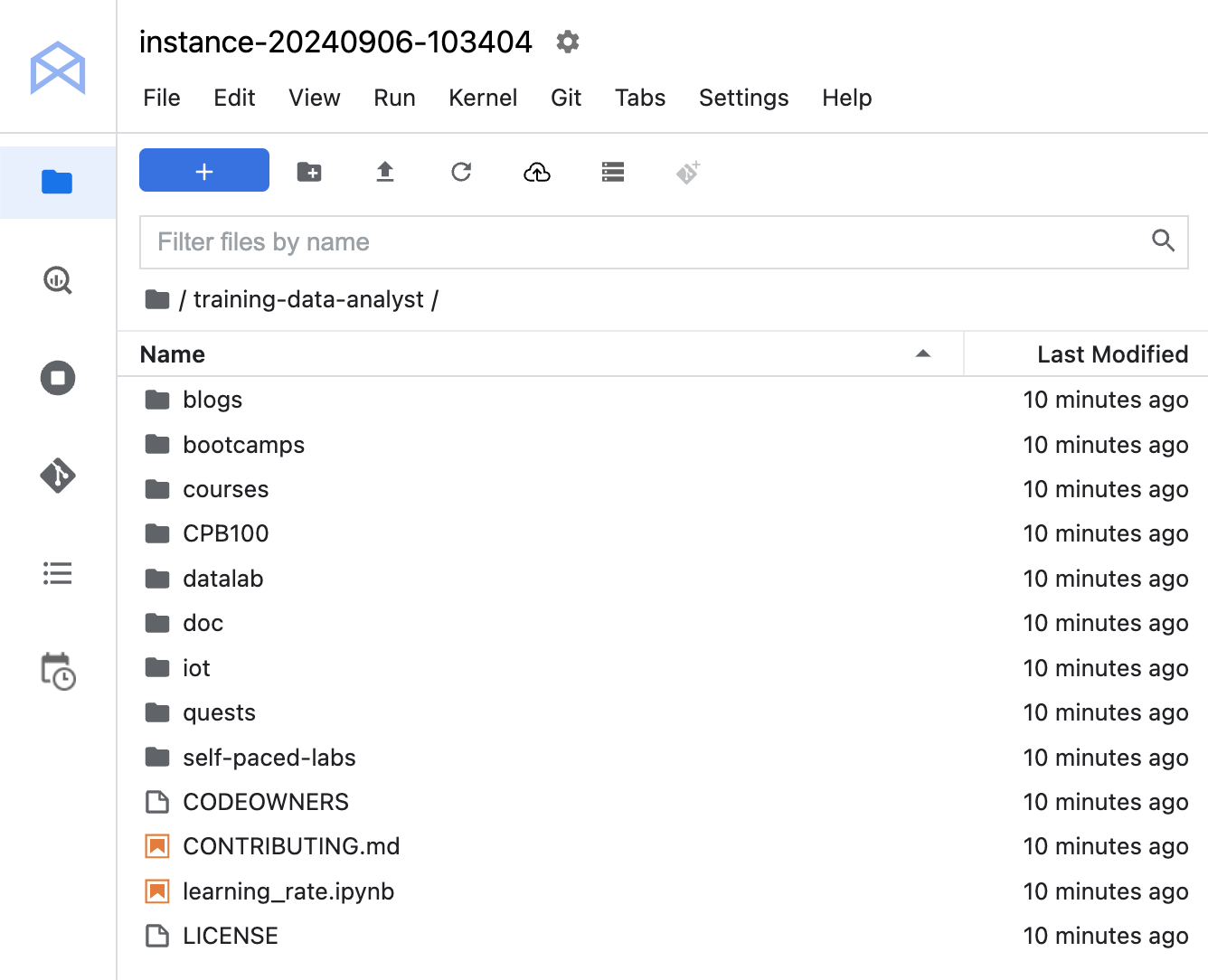
training-data-analyst repository.training-data-analyst directory and ensure that you can see its contents.In the notebook interface, navigate to training-data-analyst > courses > machine_learning > deepdive2 > recommendation_systems > labs, and open content_based_preproc.ipynb.
In the notebook interface, click Edit > Clear All Outputs.
Tip: To run the current cell, click the cell and press SHIFT+ENTER.
In the notebook interface, navigate to training-data-analyst > courses > machine_learning > deepdive2 > recommendation_systems > labs and open content_based_using_neural_networks.ipynb.
In the notebook interface, click Edit > Clear All Outputs.
Carefully read through the notebook instructions, and fill in lines marked with #TODO where you need to complete the code.
Tip: To run the current cell, click the cell and press SHIFT+ENTER. Other cell commands are listed in the notebook UI under Run.
When you have completed your lab, click End Lab. Google Skills removes the resources you’ve used and cleans the account for you.
You will be given an opportunity to rate the lab experience. Select the applicable number of stars, type a comment, and then click Submit.
The number of stars indicates the following:
You can close the dialog box if you don't want to provide feedback.
For feedback, suggestions, or corrections, please use the Support tab.
Copyright 2026 Google LLC All rights reserved. Google and the Google logo are trademarks of Google LLC. All other company and product names may be trademarks of the respective companies with which they are associated.


このコンテンツは現在ご利用いただけません
利用可能になりましたら、メールでお知らせいたします
ありがとうございます。
利用可能になりましたら、メールでご連絡いたします

1 回に 1 つのラボ
既存のラボをすべて終了して、このラボを開始することを確認してください