
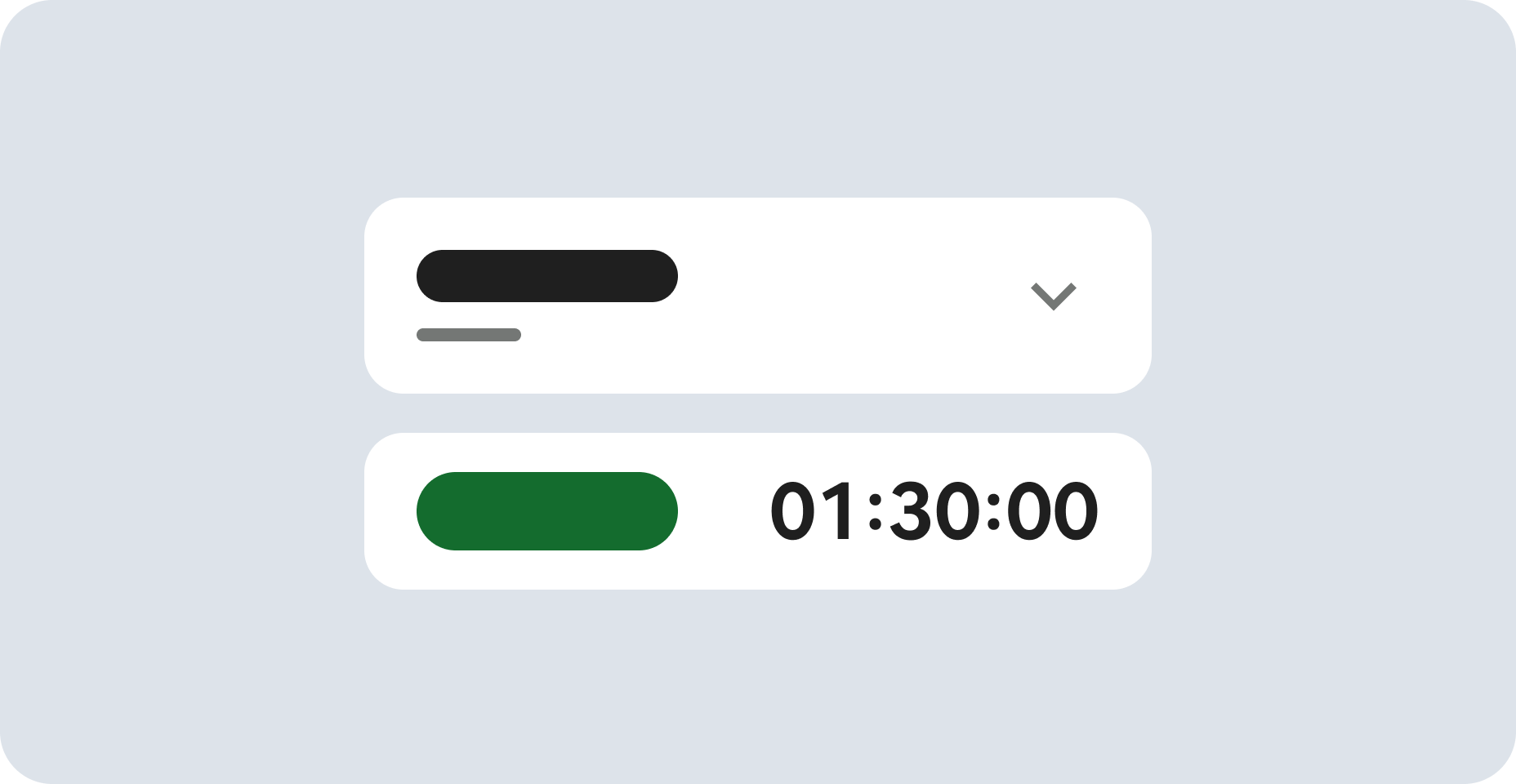
시작하기 전에
- 실습에서는 정해진 기간 동안 Google Cloud 프로젝트와 리소스를 만듭니다.
- 실습에는 시간 제한이 있으며 일시중지 기능이 없습니다. 실습을 종료하면 처음부터 다시 시작해야 합니다.
- 화면 왼쪽 상단에서 실습 시작을 클릭하여 시작합니다.

Create a GKE cluster
/ 40
Create and deploy the Pod configuration file
/ 40
Delete the cluster
/ 20

A GKE Pod is the smallest deployable unit in Google Kubernetes Engine (GKE) and Kubernetes overall. It represents a single instance of a running process in a GKE cluster. Pods are designed to be temporary and disposable. If a Pod fails (due to a crash or Node failure), Kubernetes typically deletes it and creates a new Pod to replace it, rather than repairing the old one.
A Pod typically holds one primary application container (e.g., a web server, a database). It may also hold optional sidecar containers that perform auxiliary tasks like logging, monitoring, or acting as proxies for the main application container.
Read these instructions. Labs are timed and you cannot pause them. The timer, which starts when you click Start Lab, shows how long Google Cloud resources are made available to you.
This hands-on lab lets you do the lab activities in a real cloud environment, not in a simulation or demo environment. It does so by giving you new, temporary credentials you use to sign in and access Google Cloud for the duration of the lab.
To complete this lab, you need:
Click the Start Lab button. If you need to pay for the lab, a dialog opens for you to select your payment method. On the left is the Lab Details pane with the following:
Click Open Google Cloud console (or right-click and select Open Link in Incognito Window if you are running the Chrome browser).
The lab spins up resources, and then opens another tab that shows the Sign in page.
Tip: Arrange the tabs in separate windows, side-by-side.
If necessary, copy the Username below and paste it into the Sign in dialog.
You can also find the Username in the Lab Details pane.
Click Next.
Copy the Password below and paste it into the Welcome dialog.
You can also find the Password in the Lab Details pane.
Click Next.
Click through the subsequent pages:
After a few moments, the Google Cloud console opens in this tab.

Cloud Shell is a virtual machine that is loaded with development tools. It offers a persistent 5GB home directory and runs on the Google Cloud. Cloud Shell provides command-line access to your Google Cloud resources.
Click Activate Cloud Shell 
Click through the following windows:
When you are connected, you are already authenticated, and the project is set to your Project_ID,
gcloud is the command-line tool for Google Cloud. It comes pre-installed on Cloud Shell and supports tab-completion.
Output:
Output:
gcloud, in Google Cloud, refer to the gcloud CLI overview guide.
In Cloud Shell set the default compute zone for your cluster:
my-cluster:This command provisions the Control Plane and a default number of worker Nodes (VMs) in your specified zone. This can take several minutes to complete.
kubectl (the Kubernetes command-line tool) to point to your new cluster. You can verify the connection by running the following:You should see your Nodes listed with a Ready status.
Click Check my progress to verify your performed task.
Now that the infrastructure is ready, you will deploy a basic Pod running an Nginx web server.
nginx-pod.yaml:This manifest declares a Pod with the name nginx-test-pod. It instructs Kubernetes to run one container based on the public nginx:latest image and expose port 80 internally within the Pod.
Save and exit the editor (CTRL+O, then ENTER, then CTRL+X if using nano).
To deploy your manifest, execute the following command:
Click Check my progress to verify your performed task.
port-forwarding to temporarily access the Nginx web page from the Cloud Shell environment:This command maps local Cloud Shell port 8080 to Pod port 80.
curl to access the Nginx server through the forwarded port:In a production environment, you should delete unused clusters to stop incurring charges. Practice doing that now.
In your primary Cloud Shell tab (where you ran the cluster creation command), stop the port-forwarding (if still running) with CTRL+C.
Then, delete the cluster by running the following:
Click Check my progress to verify your performed task.
You have learned how the GKE cluster provides the managed computing environment, while the Pod runs the actual application code within that environment. This foundational knowledge is crucial for moving on to more complex, production-ready deployments.
Add links to product documentation or other areas of interest here
...helps you make the most of Google Cloud technologies. Our classes include technical skills and best practices to help you get up to speed quickly and continue your learning journey. We offer fundamental to advanced level training, with on-demand, live, and virtual options to suit your busy schedule. Certifications help you validate and prove your skill and expertise in Google Cloud technologies.
Manual Last Updated: September 29, 2025
Lab Last Tested: September 29, 2025
Copyright 2025 Google LLC. All rights reserved. Google and the Google logo are trademarks of Google LLC. All other company and product names may be trademarks of the respective companies with which they are associated.


현재 이 콘텐츠를 이용할 수 없습니다
이용할 수 있게 되면 이메일로 알려드리겠습니다.
감사합니다
이용할 수 있게 되면 이메일로 알려드리겠습니다.
한 번에 실습 1개만 가능
모든 기존 실습을 종료하고 이 실습을 시작할지 확인하세요.