
Before you begin
- Labs create a Google Cloud project and resources for a fixed time
- Labs have a time limit and no pause feature. If you end the lab, you'll have to restart from the beginning.
- On the top left of your screen, click Start lab to begin

Create a Managed Airflow Environment
/ 20
Download and Configure DAGify
/ 10
Run DAGify command with Sample Data in Default Mode
/ 20
Deploy DAG to Managed Airflow
/ 20
Run DAGify command with Sample Data using a DAG Divider
/ 30
Create a Managed Airflow Environment
/ 20
Download and Configure DAGify
/ 10
Run DAGify command with Sample Data in Default Mode
/ 20
Deploy DAG to Managed Airflow
/ 20
Run DAGify command with Sample Data using a DAG Divider
/ 30

In the dynamic world of data engineering and workflow orchestration, organizations are increasingly migrating from legacy enterprise schedulers like Control-M to the open-source powerhouse, Apache Airflow. This transition often involves a complex and time-consuming process of converting existing job definitions. DAGify in a Managed Airflow environment accelerates and simplifies Control-M workflows to a cloud native environment, which allows the focus to be on optimizing workflows, and building and orchestrating data pipelines in the new environment.
DAGify is an open-source solution to automate the conversion of Control-M XML files into Airflow's native DAG format. It's also a migration accelerator as DAGify significantly reduces the manual effort, and therefore potential errors associated with the transition to Airflow.
In the flow below, Dagify converts XML files from a legacy Enterprise scheduler into Python DAG files. This expedites the transition to Airflow, in this case Airflow on Managed Airflow.
Cloud Managed Service for Airflow offers organizations a fully managed Airflow experience. It eliminates the complexities of managing Airflow infrastructure.
In this lab, you learn about using DAGify to convert Control-M export files into a Python native DAG and running migrated DAGs in a Managed Airflow Gen 3 environment.
In this lab, you learn how to perform the following tasks:
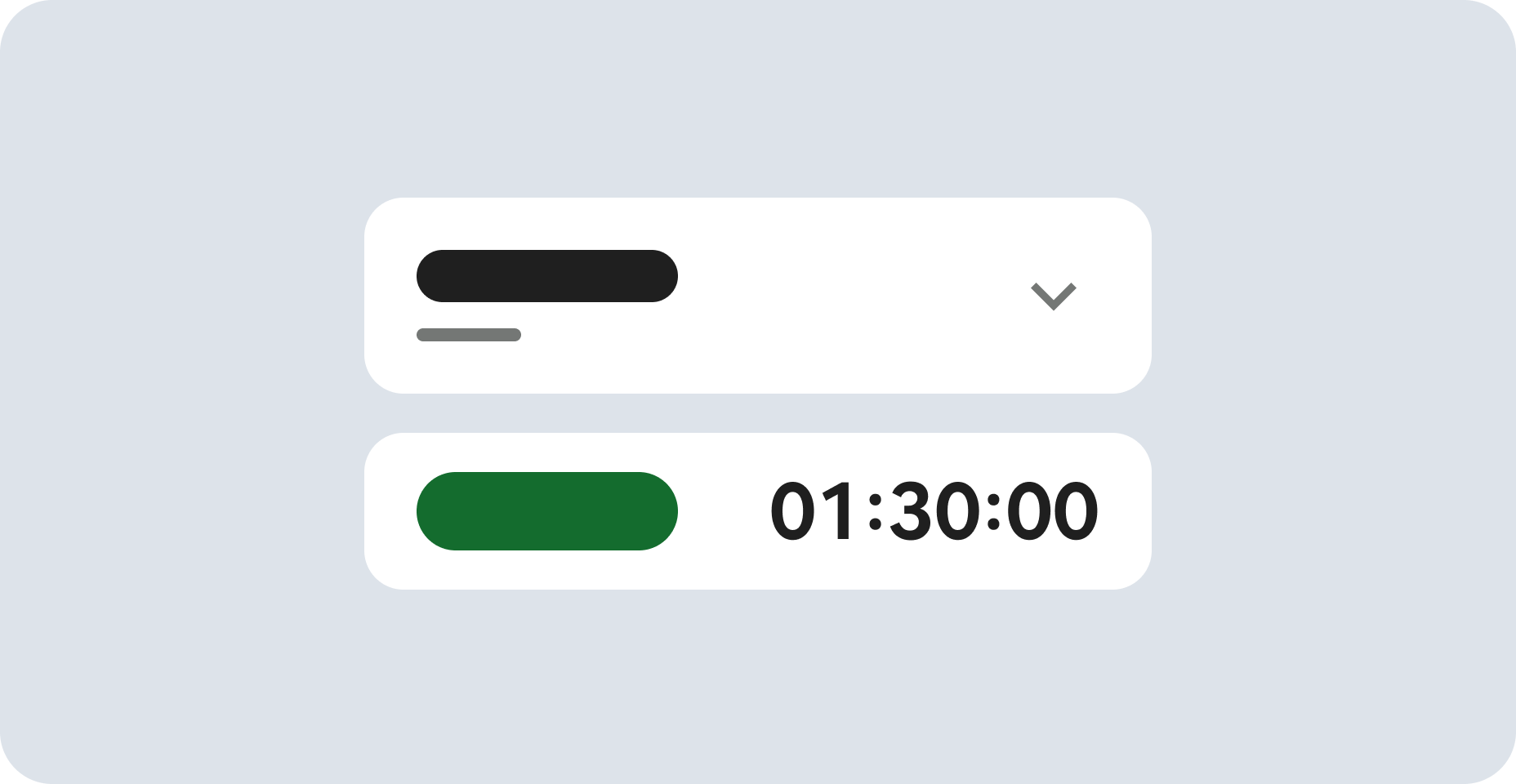
Read these instructions. Labs are timed and you cannot pause them. The timer, which starts when you click Start Lab, shows how long Google Cloud resources are made available to you.
This hands-on lab lets you do the lab activities in a real cloud environment, not in a simulation or demo environment. It does so by giving you new, temporary credentials you use to sign in and access Google Cloud for the duration of the lab.
To complete this lab, you need:
Click the Start Lab button. If you need to pay for the lab, a dialog opens for you to select your payment method. On the right is the Lab setup and access panel with the following:
Note that the lab timer is located near the top of the page, showing the remaining time.
Click Open Google Cloud console (or right-click and select Open Link in Incognito Window if you are running the Chrome browser).
The lab spins up resources, and then opens another tab that shows the Sign in page.
Tip: Arrange the tabs in separate windows, side-by-side.
If necessary, copy the Username below and paste it into the Sign in dialog.
You can also find the Username in the Lab setup and access panel.
Click Next.
Copy the Password below and paste it into the Welcome dialog.
You can also find the Password in the Lab setup and access panel.
Click Next.
Click through the subsequent pages:
After a few moments, the Google Cloud console opens in this tab.

In this task, you create a Managed Airflow Gen 3 environment.
On the Google Cloud console title bar, in the Search field, type Managed Airflow, and then click on it.
On the Environments page, for Create environment, select Managed Airflow Gen 3.
For Name, type
For Location, select
For Service account, select
For Resilience mode select Standard resilience.
Select Allow access from all IP addresses for Web server network access control.
Scroll to the bottom and click Show Advanced configuration.
For Environment bucket, select Custom bucket.
For Bucket name, click Browse, select
Leave all other fields as default.
Click Check my progress to verify the objective.
In this task, you download and set up the DAGify tool.
In the console, on the Navigation menu (
For the instance named lab-setup, in the Connect column, click SSH to open an SSH-in-browser terminal window.
In the terminal window, run the following command to clone the DAGify repository:
dagify and execute the command below:Wait a minute for the Python Packages to be installed.
Output:
Click Check my progress to verify the objective.
In this task, you use DAGify in default mode to convert the sample Control-M export file in XML format into a Python native DAG.
lab-setup terminal, view the Control-M job XML file 001-tfatf.xml by running the following command:Output:
This converts the sample Control-M export file in XML format into a Python native DAG and stores it in the output format lab-output-task-3 folder.
This also stores the final DAG Python file within a subfolder of the name of the Control-M project folder, which in this case, is 001-tfatf.
./output/lab-output-task-3/001-tfatf/ directory by running the command below:Output:
This is your converted Python DAG and it's ready for deployment within Managed Airflow.
fx_fld_001.py by running the command below:Output:
Click Check my progress to verify the objective.
In this task, you check that the Managed Airflow environment is up and then deploy the converted DAG file into the environment.
Validate that your Managed Airflow environment
From the environment list, click
Click Open DAGs folder to access the DAGs folder in the Cloud Storage bucket
Here you can see the example default DAG airflow_monitoring.py that is issued when a managed airflow environment is created.
Return to the SSH terminal window.
Upload the new Python DAG fx_fld_001.py to the Cloud Storage bucket gcloud storage cp command:
Output:
Go back to the Environment details page for
Click Open Airflow UI.
Authenticate using
Verify that fx_fld_001 DAG is visible in the DAGs list.
In this task you explore the detailed view of fx_fld_001 in Managed Airflow.
Click fx_fld_001 to open the detailed view of the DAG.
Click Code to view the original converted Python source code.
Click Graph to view the graph of all tasks and dependencies.
Click Check my progress to verify the objective.
In this task, you use DAGify with the DAG divider flag ( -d) to divide control-m workflow into multiple DAG files based on the XML Key APPLICATION.
Switch to the lab-setup terminal window.
View Control-M job XML file 002-tftf.xml by running the command:
Output:
This converts the sample Control-M export file in XML format into a Python native DAG and stores it in the output format lab-output-task-5 folder.
The final DAG Python file is stored within a subfolder in the Control-M project folder. For this case, that folder is 002-tftf.
You should see multiple Python files created in the directory ./output/lab-output-task-5/002-tftf/ similar to following:
Output:
These are new Python DAGs that are ready to deploy within Managed Airflow.
fx_fld_001_app_001.py, by running the command:Output:
gcloud storage cp command to move them to the Cloud Storage bucket associated with the Managed Airflow environment:Output:
Go back to the Environment details page for
Click Open Airflow UI.
Verify that fx_fld_001_app_001 and fx_fld_001_app_002 DAGs are visible in the DAGs list.
Click Check my progress to verify the objective.
You’ve successfully used DAGify to convert Control-M export files into a Python DAG and uploaded migrated DAGs in the Managed Airflow environment.
For more information about the DAGify, refer to DAGify Github repository
...helps you make the most of Google Cloud technologies. Our classes include technical skills and best practices to help you get up to speed quickly and continue your learning journey. We offer fundamental to advanced level training, with on-demand, live, and virtual options to suit your busy schedule. Certifications help you validate and prove your skill and expertise in Google Cloud technologies.
Manual Last Updated May 18, 2026
Lab Last Tested April 16, 2026
Copyright 2026 Google LLC. All rights reserved. Google and the Google logo are trademarks of Google LLC. All other company and product names may be trademarks of the respective companies with which they are associated.


This content is not currently available
We will notify you via email when it becomes available
Great!
We will contact you via email if it becomes available
One lab at a time
Confirm to end all existing labs and start this one
Complete this quick step to start your lab.