
Before you begin
- Labs create a Google Cloud project and resources for a fixed time
- Labs have a time limit and no pause feature. If you end the lab, you'll have to restart from the beginning.
- On the top left of your screen, click Start lab to begin

Create a new connection profile for the Amazon RDS instance for MySQL
/ 10
Create one time migration job
/ 10
Configure the IP allowlist on source instance
/ 10
Test, run and review status of a one-time migration job
/ 20
Confirm the data in Cloud SQL for MySQL
/ 10
Create a new connection profile for the Amazon RDS instance for MySQL
/ 10
Create one time migration job
/ 10
Configure the IP allowlist on source instance
/ 10
Test, run and review status of a one-time migration job
/ 20
Confirm the data in Cloud SQL for MySQL
/ 10
Database Migration Service provides options for one-time and continuous jobs to migrate data to Cloud SQL. It offers various connectivity methods, including IP allowlists, reverse SSH tunnels, VPC peering, and Private Service Connect interfaces. Learn more about connectivity options from the configure connectivity guide.
In this lab, you migrate a MySQL database from an Amazon RDS instance for MySQL to Cloud SQL for MySQL. You use a one-time Database Migration Service job and an IP allowlist for connectivity. After you create and run the migration job, you check that the database has been successfully migrated to your Cloud SQL for MySQL instance.
In this lab, you learn how to configure a one-time Database Migration Service job to migrate databases from a cloud-based MySQL instance to Cloud SQL for MySQL.
When you start the lab, it can take up to 10 minutes to fully provision the Google Cloud and Amazon RDS resources.
The Amazon RDS resources are fully provisioned when a value is generated for AWS RDS Database - Source (such as qmflvsilronjc8.cyla72gcy8zl.us-east-1.rds.amazonaws.com) within the AWS access information on this page.
When you see values for the Google Cloud Username and Password, you may proceed to the Setup tasks.
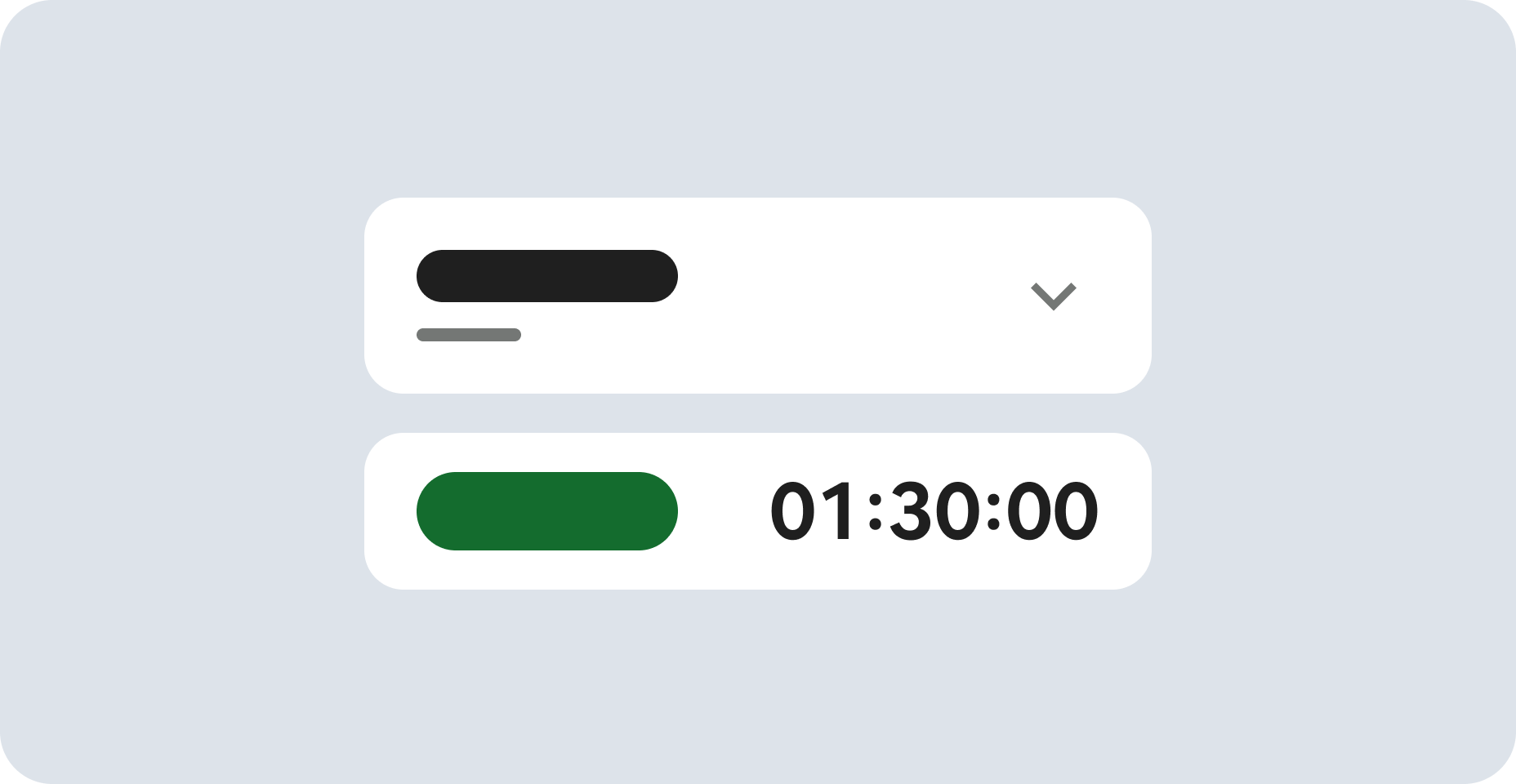
Read these instructions. Labs are timed and you cannot pause them. The timer, which starts when you click Start Lab, shows how long Google Cloud resources are made available to you.
This hands-on lab lets you do the lab activities in a real cloud environment, not in a simulation or demo environment. It does so by giving you new, temporary credentials you use to sign in and access Google Cloud for the duration of the lab.
To complete this lab, you need:
Click the Start Lab button. If you need to pay for the lab, a dialog opens for you to select your payment method. On the left is the Lab Details pane with the following:
Click Open Google Cloud console (or right-click and select Open Link in Incognito Window if you are running the Chrome browser).
The lab spins up resources, and then opens another tab that shows the Sign in page.
Tip: Arrange the tabs in separate windows, side-by-side.
If necessary, copy the Username below and paste it into the Sign in dialog.
You can also find the Username in the Lab Details pane.
Click Next.
Copy the Password below and paste it into the Welcome dialog.
You can also find the Password in the Lab Details pane.
Click Next.
Click through the subsequent pages:
After a few moments, the Google Cloud console opens in this tab.

Cloud Shell is a virtual machine that is loaded with development tools. It offers a persistent 5GB home directory and runs on the Google Cloud. Cloud Shell provides command-line access to your Google Cloud resources.
Click Activate Cloud Shell 
Click through the following windows:
When you are connected, you are already authenticated, and the project is set to your Project_ID,
gcloud is the command-line tool for Google Cloud. It comes pre-installed on Cloud Shell and supports tab-completion.
Output:
Output:
gcloud, in Google Cloud, refer to the gcloud CLI overview guide.
The Manage button is visible when the API is enabled.
Amazon RDS instance hostnames are often longer than the MySQL limit of 60 characters for hostnames. To configure a successful migration connection for MySQL, you provide the IP address of the Amazon RDS instance, instead of the hostname.
In this setup task, you install and use dig, a command-line utility, to obtain the IP address.
For the next step, identify the hostname from the AWS RDS Database - Source within the AWS access information on this page.
The IP address is provided in the last line of the Answer output section, such as 54.84.181.60.
Although AWS configuration tasks can be completed in the AWS console, this lab uses the AWS CLI to complete these tasks in Cloud Shell. In this task, you install the AWS CLI tool in Cloud Shell to access the AWS resources from Google Cloud.
| Property | Value |
|---|---|
| AWS Access Key ID [None] | Enter the provided value for AWS Access Key |
| AWS Secret Access Key [None] | Enter the provided value for AWS Secret Key |
| Default region name [None] | us-east-1 |
| Default output format [None] | Do not enter a value to accept the default |
gcloud region naming convention. Use this exact string when copying.You have now configured the AWS CLI tool.
A connection profile stores information about the source database instance (such as Amazon RDS for MySQL) and is used by Database Migration Service to migrate data from the source to your destination Cloud SQL database instance.
After you create a connection profile, it can be reused across migration jobs.
In the Google Cloud console, on the Navigation menu (
Under Databases, click Database migration.
On the left pane, click Connection profiles and then click Create profile.
For Source engine, select Amazon RDS for MySQL.
For Destination engine, select Cloud SQL for MySQL.
For Choose the profile type to create, select Source.
Enter the required information below for a connection profile:
| Property | Value |
|---|---|
| Connection profile name | mysql-rds |
| Connection profile ID | Keep the auto-generated value |
| Hostname or IP address | Enter the IP address for the AWS RDS Database you recorded earlier. |
| Port | 3306 |
| Username | admin |
| Password | changeme |
Because you use an IP allowlist as the connectivity option, you are providing a public address for the source. Learn more about connectivity options from the Database Migration Service documentation .
For Region, select
For Encryption type, select None.
When using IP allowlist as the connectivity option in a production environment, you can use SSL/TLS certificates to encrypt the data migrating from the source to the destination instance. Learn more about using an IP allowlist from the Cloud SQL documentation.
A new connection profile named mysql-rds shows in the Connections profile list.
Click Check my progress to verify the objective.
When you create a new migration job, you first define the source database instance using a pre-created connection profile. Then, you create a new destination database instance and configure connectivity between the source and destination instances.
In this task, you will use the migration job interface to create a new Cloud SQL for MySQL instance and set it as the destination for the one-time migration job from the source Amazon RDS for MySQL instance.
In the Google Cloud console, on the Navigation menu (
Under Databases, click Database migration.
On the left menu, click Migration jobs, and then click Create migration job.
For Create a migration job, in the Get started tab, use the following values:
| Property | Value |
|---|---|
| Migration job name | rds-to-cloudsql |
| Migration job ID | Keep the auto-generated value |
| Source database engine | Amazon RDS for MySQL |
| Destination region | |
| Migration job type | One-time |
Leave all other settings as default.
In the Define a source tab, for source connection profile, select mysql-rds.
Leave the defaults for the other settings.
In the Define a destination tab, for Type of destination instance, select Existing instance.
For instance ID, select mysql-cloudsql.
Click Select & continue.
If prompted to confirm, confirm by typing the instance name and click Confirm & continue.
In Define connectivity method, for Connectivity method, select IP allowlist.
Copy the Destination outgoing IP addresses (such as 35.239.140.158 and 34.172.105.39) to configure the IP allowlist on the Amazon RDS instance.
Click Save & continue.
This action saves the migration job in a draft state.
Leave this window open. You modify the IP allowlist on the Amazon RDS instance in the next task.
Click Check my progress to verify the objective.
To allow connections between the source and destination instances, you need to modify the IP allowlist on the source. For Amazon RDS, you accomplish this by modifying a Database Security Group with the public IP address of the destination instance (such as Cloud SQL).
In Cloud Shell, you use the AWS CLI to complete this task.
In Cloud Shell, run the following command to modify the IP allowlist on the Amazon RDS instance:
Replace [a.b.c.d] with the first Destination outgoing IP address of your Cloud SQL instance (such as 35.239.140.158).
34.172.105.39).Note that it's only the --cidr [a.b.c.d]/32 line that needs to be updated for the remaining outgoing IP addresses (such as --cidr 34.172.105.39/32).
The IP addresses for the Cloud SQL instance have now been added to the IP allowlist on the Amazon RDS instance.
Click Check my progress to verify the objective.
In this task, you test the migration job settings firsrt, and then start the migration job.
If you previously closed the window, you can return to the migration job by opening the Navigation menu (
Click Test job.
After a successful test, click Create & start job.
In the Create & start migration job dialog, click Create & start.
In the Google Cloud console, on the Navigation menu (
Click the migration job rds-to-cloudsql to see the details page.
Review the migration job status.
Click Check my progress to verify the objective.
In the Google Cloud console, on the Navigation menu (
Click the instance ID called mysql-cloudsql.
In the Primary instance menu, click Databases.
Notice that the databases called customers_data and sales_data have been migrated to Cloud SQL.
In the Primary instance menu, click Overview.
In Connect to this instance panel, click Open cloud shell.
The command to connect to MySQL pre-populates in Cloud Shell:
Run the pre-populated command.
If prompted, click Authorize for the API.
When prompted for a password, which you previously set, enter:
You have now activated the MySQL interactive console.
There are 5,030 records in the customers table that were migrated from the Amazon RDS instance for MySQL.
Click Check my progress to verify the objective.
You migrated a MySQL database from an Amazon RDS instance for MySQL to Cloud SQL for MySQL using a one-time Database Migration Service job and an IP allowlist for connectivity.
Learn more about data migration, Cloud SQL databases, and Database Migration Service:
...helps you make the most of Google Cloud technologies. Our classes include technical skills and best practices to help you get up to speed quickly and continue your learning journey. We offer fundamental to advanced level training, with on-demand, live, and virtual options to suit your busy schedule. Certifications help you validate and prove your skill and expertise in Google Cloud technologies.
Manual Last Updated February 12, 2026
Lab Last Tested February 12, 2026
Copyright 2026 Google LLC. All rights reserved. Google and the Google logo are trademarks of Google LLC. All other company and product names may be trademarks of the respective companies with which they are associated.


This content is not currently available
We will notify you via email when it becomes available
Great!
We will contact you via email if it becomes available
One lab at a time
Confirm to end all existing labs and start this one
Complete this quick step to start your lab.