恩逢 曹
Member since 2021
Diamond League
33675 points

 [DEPRECATED] Gemini for Application Developers
Earned נוב 8, 2024 EST
 Responsible AI for Developers: Privacy & Safety
Earned נוב 8, 2024 EST
 Vector Search and Embeddings
Earned נוב 7, 2024 EST
 [DEPRECATED] Gemini for DevOps Engineers
Earned נוב 7, 2024 EST
 [DEPRECATED] Gemini for Network Engineers
Earned נוב 7, 2024 EST
 [DEPRECATED] Gemini for Data Scientists and Analysts
Earned נוב 7, 2024 EST
 Machine Learning Operations (MLOps) for Generative AI
Earned אוק 9, 2024 EDT
 Responsible AI for Developers: Interpretability & Transparency
Earned אוק 9, 2024 EDT
 Responsible AI for Developers: Fairness & Bias
Earned אוק 9, 2024 EDT
 Inspect Rich Documents with Gemini Multimodality and Multimodal RAG
Earned אוק 9, 2024 EDT
 Develop Gen AI Apps with Gemini and Streamlit
Earned אוק 9, 2024 EDT
 Introduction to Generative AI Studio - בעברית
Earned אוק 8, 2024 EDT
 Create Image Captioning Models - בעברית
Earned אוק 8, 2024 EDT
 Transformer Models and BERT Model - בעברית
Earned אוק 8, 2024 EDT
 Encoder-Decoder Architecture - בעברית
Earned אוק 8, 2024 EDT
 Attention Mechanism - בעברית
Earned אוק 8, 2024 EDT
 Introduction to Image Generation - בעברית
Earned אוק 8, 2024 EDT
 [DEPRECATED] Gemini for end-to-end SDLC
Earned אוק 8, 2024 EDT
 [DEPRECATED] Gemini for Security Engineers
Earned אוק 8, 2024 EDT
 [DEPRECATED] Gemini for Cloud Architects
Earned אוק 8, 2024 EDT
 Responsible AI: Applying AI Principles with Google Cloud
Earned אוק 7, 2024 EDT
 Prompt Design in Agent Platform
Earned אוק 7, 2024 EDT
 Introduction to Responsible AI - בעברית
Earned אוק 7, 2024 EDT
 Introduction to Large Language Models - בעברית
Earned אוק 7, 2024 EDT
 Introduction to Generative AI - בעברית
Earned אוק 7, 2024 EDT
 Google Cloud Computing Foundations: Data, ML, and AI in Google Cloud
Earned דצמ 5, 2023 EST
 Google Cloud Computing Foundations: Infrastructure in Google Cloud
Earned דצמ 5, 2023 EST
 Google Cloud Computing Foundations: Cloud Computing Fundamentals
Earned דצמ 5, 2023 EST
 Google Cloud Computing Foundations: Networking & Security in Google Cloud
Earned דצמ 5, 2023 EST
 Level 3: GenAIus Chatbots
Earned דצמ 5, 2023 EST
 Create and Manage Cloud SQL for PostgreSQL Instances
Earned ספט 15, 2022 EDT
 Automate Data Capture at Scale with Document AI
Earned ספט 14, 2022 EDT
 DEPRECATED Build and Deploy Machine Learning Solutions on Vertex AI
Earned ספט 14, 2022 EDT
 DEPRECATED Applied Data: Blockchain
Earned ספט 11, 2022 EDT
 Create ML Models with BigQuery ML
Earned ספט 11, 2022 EDT
 DEPRECATED Detect Manufacturing Defects Using Visual Inspection AI
Earned ספט 11, 2022 EDT
 Cloud Engineering
Earned ספט 11, 2022 EDT
 Perform Predictive Data Analysis in BigQuery
Earned ספט 11, 2022 EDT
 Migrating MySQL data to Cloud SQL using Database Migration Service
Earned פבר 3, 2022 EST
 VM Migration
Earned פבר 3, 2022 EST
 Build a Secure Google Cloud Network
Earned פבר 1, 2022 EST
 DEPRECATED Network Performance and Optimization
Earned פבר 1, 2022 EST
 Automate Deployment and Manage Traffic on a Google Cloud Network
Earned פבר 1, 2022 EST
 Monitor and Log with Google Cloud Observability
Earned ינו 29, 2022 EST
 DEPRECATED Cloud Architecture
Earned ינו 29, 2022 EST
 DevOps Essentials
Earned ינו 29, 2022 EST
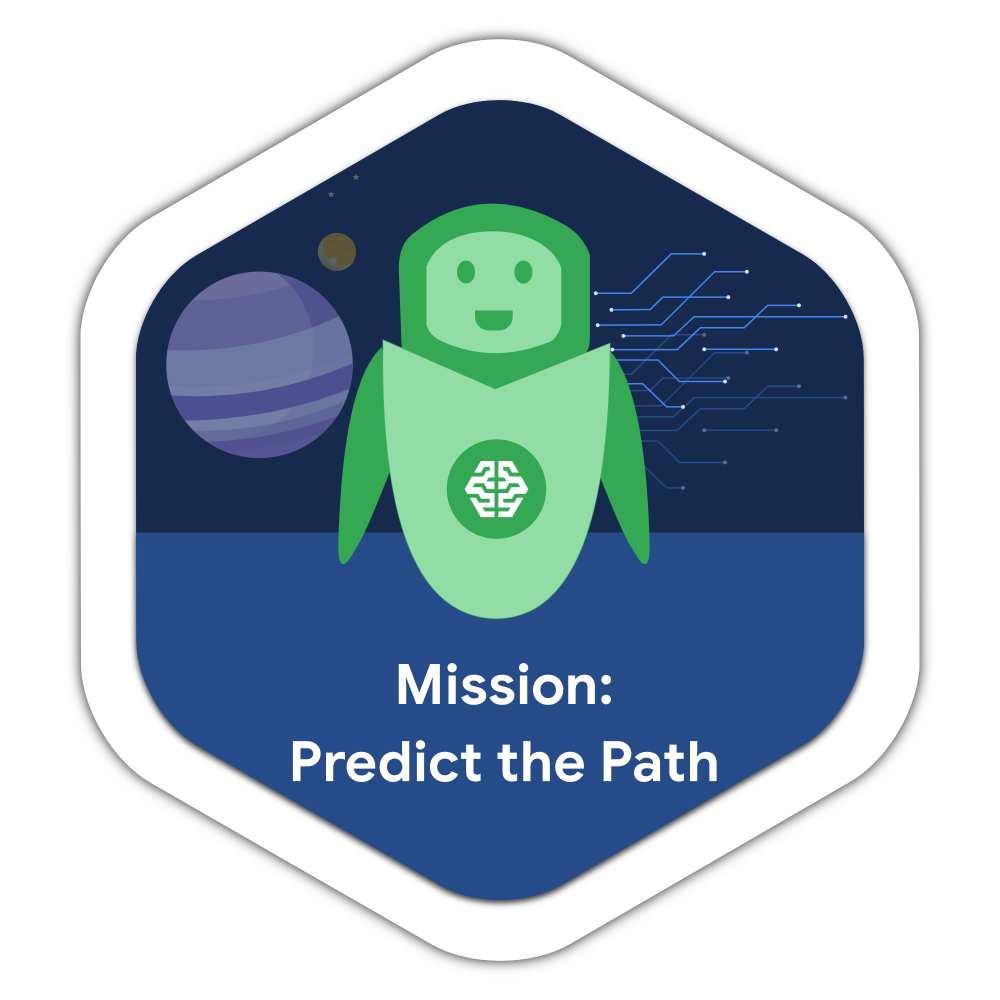 Mission: Predict the Path
Earned אוג 3, 2021 EDT
 Kubernetes in Google Cloud
Earned יונ 26, 2021 EDT
 Baseline: Infrastructure
Earned יונ 26, 2021 EDT
 Workspace: Add-ons
Earned יונ 26, 2021 EDT
 Google Workspace Essentials
Earned יונ 25, 2021 EDT
 Intro to ML: Image Processing
Earned יונ 25, 2021 EDT
 Intro to ML: Language Processing
Earned יונ 25, 2021 EDT
 Baseline: Data, ML, AI
Earned יונ 25, 2021 EDT
 Build Apps & Websites with Firebase
Earned יונ 24, 2021 EDT
 Google Cloud Run Serverless Workshop
Earned יונ 24, 2021 EDT
 BigQuery for Machine Learning
Earned יונ 24, 2021 EDT
 Machine Learning APIs
Earned יונ 24, 2021 EDT
 [DEPRECATED] OK Google: Build Interactive Apps with Google Assistant
Earned יונ 24, 2021 EDT
 Website on Google Cloud
Earned יונ 24, 2021 EDT
 Optimize Costs for Google Kubernetes Engine
Earned יונ 24, 2021 EDT
 [DEPRECATED] Build Interactive Apps with Google Assistant
Earned יונ 23, 2021 EDT
 Develop Serverless Applications on Cloud Run
Earned יונ 23, 2021 EDT
 Set Up an App Dev Environment on Google Cloud
Earned יונ 23, 2021 EDT
 Develop Serverless Apps with Firebase
Earned יונ 22, 2021 EDT
 Use Machine Learning APIs on Google Cloud
Earned יונ 22, 2021 EDT
 Implementing Cloud Load Balancing for Compute Engine
Earned יונ 21, 2021 EDT
 Build a Website on Google Cloud
Earned יונ 21, 2021 EDT
 DEPRECATED Application Development - Python
Earned יונ 17, 2021 EDT
 DEPRECATED Anthos Service Mesh
Earned יונ 16, 2021 EDT
 Prepare Data for ML APIs on Google Cloud
Earned יונ 14, 2021 EDT
 Google Cloud Essentials
Earned יונ 3, 2021 EDT
In this course, you learn how Gemini, a generative AI-powered collaborator from Google Cloud, helps developers build applications. You learn how to prompt Gemini to explain code, recommend Google Cloud services, and generate code for your applications. Using a hands-on lab, you experience how Gemini improves the application development workflow.
Duet AI was renamed to Gemini, our next-generation model.
Learn more
This course introduces important topics of AI privacy and safety. It explores practical methods and tools to implement AI privacy and safety recommended practices through the use of Google Cloud products and open-source tools.
Learn more
Explore AI-powered search technologies, tools, and applications in this course. Learn semantic search utilizing vector embeddings, hybrid search combining semantic and keyword approaches, and retrieval-augmented generation (RAG) minimizing AI hallucinations as a grounded AI agent. Gain practical experience with Vertex AI Vector Search to build your intelligent search engine. Explore other content in the Gemini Agent Ready (GEAR) program.
Learn more
In this course, you learn how Gemini, a generative AI-powered collaborator from Google Cloud, helps engineers manage infrastructure. You learn how to prompt Gemini to find and understand application logs, create a GKE cluster, and investigate how to create a build environment. Using a hands-on lab, you experience how Gemini improves the DevOps workflow.
Duet AI was renamed to Gemini, our next-generation model.
Learn more
In this course, you learn how Gemini, a generative AI-powered collaborator from Google Cloud, helps network engineers create, update, and maintain VPC networks. You learn how to prompt Gemini to provide specific guidance for your networking tasks, beyond what you would receive from a search engine. Using a hands-on lab, you experience how Gemini makes it easier for you to work with Google Cloud VPC networks.
Duet AI was renamed to Gemini, our next-generation model.
Learn more
In this course, you learn how Gemini, a generative AI-powered collaborator from Google Cloud, helps analyze customer data and predict product sales. You also learn how to identify, categorize, and develop new customers using customer data in BigQuery. Using hands-on labs, you experience how Gemini improves data analysis and machine learning workflows.
Learn more
This course is dedicated to equipping you with the knowledge and tools needed to uncover the unique challenges faced by MLOps teams when deploying and managing Generative AI models, and exploring how Gemini Enterprise Agent Platform empowers AI teams to streamline MLOps processes and achieve success in Generative AI projects.
Learn more
This course introduces concepts of AI interpretability and transparency. It discusses the importance of AI transparency for developers and engineers. It explores practical methods and tools to help achieve interpretability and transparency in both data and AI models.
Learn more
This course introduces concepts of responsible AI and AI principles. It covers techniques to practically identify fairness and bias and mitigate bias in AI/ML practices. It explores practical methods and tools to implement Responsible AI best practices using Google Cloud products and open source tools.
Learn more
Complete the intermediate Inspect Rich Documents with Gemini Multimodality and Multimodal RAG skill badge course to demonstrate skills in the following: using multimodal prompts to extract information from text and visual data, generating a video description, and retrieving extra information beyond the video using multimodality with Gemini; building metadata of documents containing text and images, getting all relevant text chunks, and printing citations by using Multimodal Retrieval Augmented Generation (RAG) with Gemini. Explore other content in the Gemini Enterprise Agent Ready (GEAR) program.
Learn more
Complete the intermediate Develop Gen AI Apps with Gemini and Streamlit skill badge course to demonstrate skills in text generation, applying function calls with the Python SDK and Gemini API, and deploying a Streamlit application with Cloud Run. In this course, you learn Gemini prompting, test Streamlit apps in Cloud Shell, and deploy them as Docker containers in Cloud Run. Explore other content in the Gemini Enterprise Agent Ready (GEAR) program.
Learn more
בקורס הזה נלמד על Generative AI Studio, מוצר ב-Vertex AI שעוזר ליצור אבות טיפוס למודלים של בינה מלאכותית גנרטיבית, כדי להשתמש בהם ולהתאים אותם לפי הצרכים שלכם. באמצעות הדגמה של המוצר עצמו, נלמד מהו Generative AI Studio, מהם הפיצ'רים והאפשרויות שלו, ואיך להשתמש בו. בסוף הקורס יהיה שיעור Lab מעשי לתרגול של מה שנלמד, ובוחן לבדיקת הידע.
Learn more
בקורס הזה תלמדו איך ליצור מודל הוספת כיתוב לתמונה באמצעות למידה עמוקה (Deep Learning). אתם תלמדו על הרכיבים השונים במודל הוספת כיתוב לתמונה, כמו המקודד והמפענח, ואיך לאמן את המודל ולהעריך את הביצועים שלו. בסוף הקורס תוכלו ליצור מודלים להוספת כיתוב לתמונה ולהשתמש בהם כדי ליצור כיתובים לתמונות
Learn more
בקורס הזה נציג את הארכיטקטורה של טרנספורמרים ואת המודל של ייצוגים דו-כיווניים של מקודד מטרנספורמרים (BERT). תלמדו על החלקים השונים בארכיטקטורת הטרנספורמר, כמו מנגנון תשומת הלב, ועל התפקיד שלו בבניית מודל BERT. תלמדו גם על המשימות השונות שאפשר להשתמש ב-BERT כדי לבצע אותן, כמו סיווג טקסטים, מענה על שאלות והֶקֵּשׁ משפה טבעית. נדרשות כ-45 דקות כדי להשלים את הקורס הזה.
Learn more
בקורס הזה לומדים בקצרה על ארכיטקטורת מקודד-מפענח, ארכיטקטורה עוצמתית ונפוצה ללמידת מכונה שמשתמשים בה במשימות של רצף לרצף, כמו תרגום אוטומטי, סיכום טקסט ומענה לשאלות. תלמדו על החלקים השונים בארכיטקטורת מקודד-מפענח, איך לאמן את המודלים האלה ואיך להשתמש בהם. בהדרכה המפורטת המשלימה בשיעור ה-Lab תקודדו ב-TensorFlow תרחיש שימוש פשוט בארכיטקטורת מקודד-מפענח: כתיבת שיר מאפס.
Learn more
בקורס נלמד על מנגנון תשומת הלב, שיטה טובה מאוד שמאפשרת לרשתות נוירונים להתמקד בחלקים ספציפיים ברצף הקלט. נלמד איך עובד העיקרון של תשומת הלב, ואיך אפשר להשתמש בו כדי לשפר את הביצועים במגוון משימות של למידת מכונה, כולל תרגום אוטומטי, סיכום טקסט ומענה לשאלות.
Learn more
בקורס נלמד על מודלים של דיפוזיה, משפחת מודלים של למידת מכונה שיצרו הרבה ציפיות לאחרונה בתחום של יצירת תמונות. מודלים של דיפוזיה שואבים השראה מפיזיקה, וספציפית מתרמודינמיקה. בשנים האחרונות, מודלים של דיפוזיה הפכו לפופולריים גם בתחום המחקר וגם בתעשייה. מודלים של דיפוזיה עומדים מאחורי הרבה מהכלים והמודלים החדשניים ליצירת תמונות ב-Google Cloud. בקורס הזה נלמד על התיאוריה שמאחורי מודלים של דיפוזיה, ואיך לאמן ולפרוס אותם ב-Vertex AI.
Learn more
In this course, you learn how Gemini, a generative AI-powered collaborator from Google Cloud, helps you use Google products and services to develop, test, deploy, and manage applications. With help from Gemini, you learn how to develop and build a web application, fix errors in the application, develop tests, and query data. Using a hands-on lab, you experience how Gemini improves the software development lifecycle (SDLC).
Duet AI was renamed to Gemini, our next-generation model.
Learn more
In this course, you learn how Gemini, a generative AI-powered collaborator from Google Cloud, helps you secure your cloud environment and resources. You learn how to deploy example workloads into an environment in Google Cloud, identify security misconfigurations with Gemini, and remediate security misconfigurations with Gemini. Using a hands-on lab, you experience how Gemini improves your cloud security posture.
Duet AI was renamed to Gemini, our next-generation model.
Learn more
In this course, you learn how Gemini, a generative AI-powered collaborator from Google Cloud, helps administrators provision infrastructure. You learn how to prompt Gemini to explain infrastructure, deploy GKE clusters and update existing infrastructure. Using a hands-on lab, you experience how Gemini improves the GKE deployment workflow.
Duet AI was renamed to Gemini, our next-generation model.
Learn more
As the use of enterprise Artificial Intelligence and Machine Learning continues to grow, so too does the importance of building it responsibly. A challenge for many is that talking about responsible AI can be easier than putting it into practice. If you’re interested in learning how to operationalize responsible AI in your organization, this course is for you.
In this course, you will learn how Google Cloud does this today, together with best practices and lessons learned, to serve as a framework for you to build your own responsible AI approach.
Learn more
Complete the introductory Prompt Design in Agent Platform skill badge to demonstrate skills in the following: prompt engineering, image analysis, and multimodal generative techniques, within Agent Platform. Discover how to craft effective prompts, guide generative AI output, and apply Gemini models to real-world marketing scenarios. Explore other content in the Gemini Enterprise Agent Ready (GEAR) program.
Learn more
זהו קורס מבוא ממוקד שמטרתו להסביר מהי אתיקה של בינה מלאכותית, למה היא חשובה ואיך Google נוהגת לפי כללי האתיקה של הבינה המלאכותית במוצרים שלה. מוצגים בו גם 7 עקרונות ה-AI של Google.
Learn more
זהו קורס מבוא ממוקד שבוחן מהם מודלים גדולים של שפה (LLM), איך משתמשים בהם בתרחישים שונים לדוגמה ואיך אפשר לשפר את הביצועים שלהם באמצעות כוונון של הנחיות. הוא גם כולל הסבר על הכלים של Google שיעזרו לכם לפתח אפליקציות בינה מלאכותית גנרטיבית משלכם.
Learn more
זהו קורס מבוא ממוקד שמטרתו להסביר מהי בינה מלאכותית גנרטיבית, איך משתמשים בה ובמה היא שונה משיטות מסורתיות של למידת מכונה. הוא גם כולל הסבר על הכלים של Google שיעזרו לכם לפתח אפליקציות בינה מלאכותית גנרטיבית משלכם.
Learn more
The Google Cloud Computing Foundations courses are for individuals with little to no background or experience in cloud computing. They provide an overview of concepts central to cloud basics, big data, and machine learning, and where and how Google Cloud fits in.
By the end of the series of courses, learners will be able to articulate these concepts and demonstrate some hands-on skills.
The courses should be completed in the following order:
1. Google Cloud Computing Foundations: Cloud Computing Fundamentals
2. Google Cloud Computing Foundations: Infrastructure in Google Cloud
3. Google Cloud Computing Foundations: Networking and Security in Google Cloud
4. Google Cloud Computing Foundations: Data, ML, and AI in Google Cloud
This final course in the series reviews managed big data services, machine learning and its value, and how to demonstrate your skill set in Google Cloud further by earning Skill Badges.
Learn more
The Google Cloud Computing Foundations courses are for individuals with little to no background or experience in cloud computing. They provide an overview of concepts central to cloud basics, big data, and machine learning, and where and how Google Cloud fits in.
By the end of the series of courses, learners will be able to articulate these concepts and demonstrate some hands-on skills.
The courses should be completed in the following order:
1. Google Cloud Computing Foundations: Cloud Computing Fundamentals
2. Google Cloud Computing Foundations: Infrastructure in Google Cloud
3. Google Cloud Computing Foundations: Networking and Security in Google Cloud
4. Google Cloud Computing Foundations: Data, ML, and AI in Google Cloud
This first course provides an overview of cloud computing, ways to use Google Cloud, and different compute options.
Learn more
The Google Cloud Computing Foundations courses are for individuals with little to no background or experience in cloud computing. They provide an overview of concepts central to cloud basics, big data, and machine learning, and where and how Google Cloud fits in.
By the end of the series of courses, learners will be able to articulate these concepts and demonstrate some hands-on skills.
The courses should be completed in the following order:
1. Google Cloud Computing Foundations: Cloud Computing Fundamentals
2. Google Cloud Computing Foundations: Infrastructure in Google Cloud
3. Google Cloud Computing Foundations: Networking and Security in Google Cloud
4. Google Cloud Computing Foundations: Data, ML, and AI in Google Cloud
This third course covers cloud automation and management tools and building secure networks.
Learn more
With each passing day, Generative AI becomes more integral, offering fresh perspectives and transformative possibilities. We invite you to join us and see for yourself how Gen AI shapes tomorrow and be a part of it by gaining hands-on experience with Google Cloud’s powerful Gen AI tools and techniques and earn your first Google Cloud Gen AI credential!
Learn more
Complete the introductory Create and Manage Cloud SQL for PostgreSQL Instances skill badge to demonstrate skills in the following: migrating, configuring, and managing Cloud SQL for PostgreSQL instances and databases.
Learn more
Earn the introductory skill badge by completing the Automate Data Capture at Scale with Document AI course. In this course, you learn how to extract, process, and capture data using Document AI.
Learn more
Earn the intermediate skill badge by completing the Build and Deploy Machine Learning Solutions on Vertex AI skill badge course, where you learn how to use Google Cloud's Vertex AI platform, AutoML, and custom training services to train, evaluate, tune, explain, and deploy machine learning models.
Learn more
Blockchain and related technologies, such as distributed ledger and distributed apps, are becoming new value drivers and solution priorities in many industries. In this course you will gain hands-on experience with distributed ledger and the exploration of blockchain datasets in Google Cloud. It brings the research and solution work of Google's Allen Day into self-paced labs for you to run and learn directly. Since this course uses advanced SQL in BigQuery, a SQL-in-BigQuery refresher lab is at the start.
Learn more
Complete the intermediate Create ML Models with BigQuery ML skill badge to demonstrate skills in creating and evaluating machine learning models with BigQuery ML to make data predictions.
Learn more
Earn a skill badge by completing the Detect Manufacturing Defects using Visual Inspection AI course, where you learn how to use Visual Inspection AI to deploy a solution artifact and test that it can successfully identify defects in a manufacturing process.
Learn more
This fundamental-level quest is unique amongst the other quest offerings. The labs have been curated to give IT professionals hands-on practice with topics and services that appear in the Google Cloud Certified Associate Cloud Engineer Certification. From IAM, to networking, to Kubernetes engine deployment, this quest is composed of specific labs that will put your Google Cloud knowledge to the test. Be aware that while practice with these labs will increase your skills and abilities, we recommend that you also review the exam guide and other available preparation resources.
Learn more
Complete the intermediate Perform Predictive Data Analysis in BigQuery skill badge course to demonstrate skills in the following: creating datasets in BigQuery by importing CSV and JSON files; harnessing the power of BigQuery with sophisticated SQL analytical concepts, including using BigQuery ML to train an expected goals model on soccer event data and evaluate the impressiveness of World Cup goals.
Learn more
This course offers hands-on practice with migrating MySQL data to Cloud SQL using Database Migration Service. You start with an introductory lab that briefly reviews how to get started with Cloud SQL for MySQL, including how to connect to Cloud SQL instances using the Cloud Console. Then, you continue with two labs focused on migrating MySQL databases to Cloud SQL using different job types and connectivity options available in Database Migration Service. The course ends with a lab on migrating MySQL user data when running Database Migration Service jobs.
Learn more
Google Cloud’s four step structured Cloud Migration Path Methodology provides a defined and repeatable path for users to follow when migrating and modernizing Virtual Machines. In this quest, you will get hands-on practice with Google’s current solution set for VM assessment, planning, migration, and modernization. You will start by analyzing your lab environment and building assessment reports with CloudPhysics and StratoZone, then build a landing zone within Google Cloud leveraging Terraform’s infrastructure-as-code templates, next you will manually transform a two-tier application into a cloud-native workload running on Kubernetes, and finally, transform a VM workload into Kubernetes with Migrate for Anthos and migrate a VM between cloud environments.
Learn more
Earn a skill badge by completing the Build a Secure Google Cloud Network skill badge course, where you will learn about multiple networking-related resources to build, scale, and secure your applications on Google Cloud.
Learn more
If you want to take your Google Cloud networking skills to the next level, look no further. This course is composed of labs that cover real-life use cases and it will teach you best practices for overcoming common networking bottlenecks. From getting hands-on practice with testing and improving network performance, to integrating high-throughput VPNs and networking tiers, Network Performance and Optimization is an essential course for Google Cloud developers who are looking to double down on application speed and robustness.
Learn more
Networking is a principle theme of cloud computing. It’s the underlying structure of Google Cloud, and it’s what connects all your resources and services to one another. This course will cover essential Google Cloud networking services and will give you hands-on practice with specialized tools for developing mature networks. From learning the ins-and-outs of VPCs, to creating enterprise-grade load balancers, Automate Deployment and Manage Traffic on a Google Cloud Network will give you the practical experience needed so you can start building robust networks right away.
Learn more
Complete the introductory Monitor and Log with Google Cloud Observability skill badge course to demonstrate skills in the following: monitoring virtual machines in Compute Engine, utilizing Cloud Monitoring for multi-project oversight, extending monitoring and logging capabilities to Cloud Functions, creating and sending custom application metrics, and configuring Cloud Monitoring alerts based on custom metrics.
Learn more
This fundamental-level quest is unique amongst the other quest offerings. The labs have been curated to give IT professionals hands-on practice with topics and services that appear in the Google Cloud Certified Professional Cloud Architect Certification. From IAM, to networking, to Kubernetes engine deployment, this quest is composed of specific labs that will put your Google Cloud knowledge to the test. Be aware that while practice with these labs will increase your skills and abilities, we recommend that you also review the exam guide and other available preparation resources.
Learn more
Obtain a competitive advantage through DevOps. DevOps is an organizational and cultural movement that aims to increase software delivery velocity, improve service reliability, and build shared ownership among software stakeholders. In this course you will learn how to use Google Cloud to improve the speed, stability, availability, and security of your software delivery capability. DevOps Research and Assessment has joined Google Cloud. How does your team measure up? Take this five question multiple-choice quiz and find out!
Learn more
Study Jam organizers, welcome to your preview mission! Preview the first global mission with us so you’re prepared to support your communities. Planet Zorg is under threat!
An asteroid is hurtling through space, speeding towards our hero’s home. But where will it fall? Help ML-49 predict the future with this mission’s labs. You’ll learn skills like forecasting and prediction, with tools like BigQuery and AI Platform.
The more points you score, the better chance you and ML-49 have of predicting the asteroid’s drop zone.
Learn more
Kubernetes is the most popular container orchestration system, and Google Kubernetes Engine was designed specifically to support managed Kubernetes deployments in Google Cloud. In this course, you will get hands-on practice configuring Docker images, containers, and deploying fully-fledged Kubernetes Engine applications.
Learn more
If you are a novice cloud developer looking for hands-on practice beyond Google Cloud Essentials, this course is for you. You will get practical experience through labs that dive into Cloud Storage and other key application services like Monitoring and Cloud Functions. You will develop valuable skills that are applicable to any Google Cloud initiative. 1-minute videos walk you through key concepts for these labs.
Learn more
This course demonstrates the power of integrating Google Cloud services and tools with Workspace applications - like using Node.js to build a survey bot, the Natural Language API to recognize sentiment in a Google Doc, and building a chat bot with Apps Script.
Learn more
Workspace is Google's collaborative applications platform, delivered from Google Cloud. In this introductory-level course you will get hands-on practice with Workspace’s core applications from a user perspective. Although there are many more applications and tool components to Workspace than are covered here, you will get experience with the primary apps: Gmail, Calendar, Sheets and a handful of others. Each lab can be completed in 10-15 minutes, but extra time is provided to allow self-directed free exploration of the applications.
Learn more
Using large scale computing power to recognize patterns and "read" images is one of the foundational technologies in AI, from self-driving cars to facial recognition. The Google Cloud Platform provides world class speed and accuracy via systems that can utilized by simply calling APIs. With these and a host of other APIs, GCP has a tool for just about any machine learning job. In this introductory quest, you will get hands-on practice with machine learning as it applies to image processing by taking labs that will enable you to label images, detect faces and landmarks, as well as extract, analyze, and translate text from within images.
Learn more
It’s no secret that machine learning is one of the fastest growing fields in tech, and the Google Cloud Platform has been instrumental in furthering its development. With a host of APIs, GCP has a tool for just about any machine learning job. In this introductory course, you will get hands-on practice with machine learning as it applies to language processing by taking labs that will enable you to extract entities from text, and perform sentiment and syntactic analysis as well as use the Speech to Text API for transcription.
Learn more
Big data, machine learning, and artificial intelligence are today’s hot computing topics, but these fields are quite specialized and introductory material is hard to come by. Fortunately, Google Cloud provides user-friendly services in these areas, and with this introductory-level quest, so you can take your first steps with tools like BigQuery, Cloud Speech API and Video Intelligence. Want extra help? 1-minute videos walk you through key concepts for each lab.
Learn more
Firebase is a backend-as-service (Bass) platform for creating mobile and web applications. In this quest you will learn to build serverless web apps, import data into a serverless database, and build a Google Assistant application with Firebase and its Google Cloud integrations. Looking for a hands on challenge lab to demonstrate your skills and validate your knowledge? On completing this quest, enroll in and finish the additional challenge lab at the end of this quest to receive an exclusive Google Cloud digital badge.
Learn more
Twelve years ago Lily started the Pet Theory chain of veterinary clinics, and has been expanding rapidly. Now, Pet Theory is experiencing some growing pains: their appointment scheduling system is not able to handle the increased load, customers aren't receiving lab results reliably through email and text, and veteranerians are spending more time with insurance companies than with their patients. Lily wants to build a cloud-based system that scales better than the legacy solution and doesn't require lots of ongoing maintenance. The team has decided to go with serverless technology. For the labs in the Google Cloud Run Serverless Quest, you will read through a fictitious business scenario in each lab and assist the characters in implementing a serverless solution. Looking for a hands on challenge lab to demonstrate your skills and validate your knowledge? On completing this quest, enroll in and finish the additional challenge lab at the end of this quest to receive an exclusive Google…
Learn more
Want to build ML models in minutes instead of hours using just SQL? BigQuery ML democratizes machine learning by letting data analysts create, train, evaluate, and predict with machine learning models using existing SQL tools and skills. In this series of labs, you will experiment with different model types and learn what makes a good model.
Learn more
It's no secret that machine learning is one of the fastest growing fields in tech, and Google Cloud has been instrumental in furthering its development. With a host of APIs, Google Cloud has a tool for just about any machine learning job. In this advanced-level course, you will get hands-on practice with machine learning APIs by taking labs like Detect Labels, Faces, and Landmarks in Images with the Cloud Vision API. Looking for a hands-on challenge lab to demonstrate your skills and validate your knowledge? Enroll in and finish the additional challenge lab at the end of this quest to receive an exclusive Google Cloud digital badge.
Learn more
With Google Assistant part of over a billion consumer devices, this quest teaches you how to build practical Google Assistant applications integrated with Google Cloud services via APIs. Example apps will use the Dialogflow conversational suite and the Actions and Cloud Functions frameworks. You will build 5 different applications that explore useful and fun tools you can extend on your own. No hardware required! These labs use the cloud-based Google Assistant simulator environment for developing and testing, but if you do have your own device, such as a Google Home or a Google Hub, additional instructions are provided on how to deploy your apps to your own hardware.
Learn more
In this course you will learn about the four Google Cloud website architectures available to ensure that your website is available and scalable. Looking for a hands on challenge lab to demonstrate your skills and validate your knowledge? On completing this quest, finish the additional challenge lab at the end of this Build a Website on Google Cloud to receive an exclusive Google Cloud digital badge. This quest is based on the video series Get Cooking in Cloud.
Learn more
Complete the intermediate Optimize Costs for Google Kubernetes Engine skill badge course to demonstrate skills in the following: creating and managing multi-tenant clusters, monitoring resource usage by namespace, configuring cluster and pod autoscaling for efficiency, setting up load balancing for optimal resource distribution, and implementing liveness and readiness probes to ensure application health and cost-effectiveness.
Learn more
Earn a skill badge by completing the Build Interactive Apps with Google Assistant quest, where you will learn how to build Google Assistant applications, including how to: create an Actions project, integrate Dialogflow with an Actions project, test your application with Actions simulator, build an Assistant application with flash cards template, integrate customer MP3 files with your Assistant application, add Cloud Translation API to your Assistant application, and use APIs and integrate them into your applications. A skill badge is an exclusive digital badge issued by Google Cloud in recognition of your proficiency with Google Cloud products and services and tests your ability to apply your knowledge in an interactive hands-on environment. Complete the skill badge quest, and final assessment challenge lab, to receive a digital badge that you can share with your network.
Learn more
Complete the intermediate Develop Serverless Applications on Cloud Run skill badge course to demonstrate skills in the following: integrating Cloud Run with Cloud Storage for data management, architecting resilient asynchronous systems using Cloud Run and Pub/Sub, constructing REST API gateways powered by Cloud Run, and building and deploying services on Cloud Run.
Learn more
Earn a skill badge by completing the Set Up an App Dev Environment on Google Cloud skill badge course, where you learn how to build and connect storage-centric cloud infrastructure using the basic capabilities of the following technologies: Cloud Storage, Identity and Access Management, Cloud Functions, and Pub/Sub.
Learn more
Complete the intermediate Develop Serverless Apps with Firebase skill badge course to demonstrate skills in the following: architecting and building serverless web applications with Firebase, utilizing Firestore for database management, automating deployment processes using Cloud Build, and integrating Google Assistant functionality into your applications.
Learn more
Earn the advanced skill badge by completing the Use Machine Learning APIs on Google Cloud course, where you learn the basic features for the following machine learning and AI technologies: Cloud Vision API, Cloud Translation API, and Cloud Natural Language API.
Learn more
Complete the introductory Implementing Cloud Load Balancing for Compute Engine skill badge to demonstrate skills in the following: creating and deploying virtual machines in Compute Engine and configuring network and application load balancers.
Learn more
Earn the introductory skill badge by completing the Build a Website on Google Cloud skill badge course. This course is based on the Get Cooking in Cloud series and covers`:`Deploying a website on Cloud RunHosting a web app on Compute EngineCreating, deploying, and scaling your website on Google Kubernetes EngineMigrating from a monolithic application to a microservices architecture using Cloud Build
Learn more
In this advanced-level quest, you will learn the ins and outs of developing GCP applications in Python. The first labs will walk you through the basics of environment setup and application data storage with Cloud Datastore. Once you have a handle on the fundamentals, you will get hands-on practice deploying Python applications on Kubernetes and App Engine (the latter is the same framework that powers Snapchat!) With specialized bonus labs that teach user authentication and backend service development, this quest will give you practical experience so you can start developing robust Python applications straight away.
Learn more
This intermediate-level quest is unique among Qwiklabs quests. These labs have been curated to give operators hands-on practice with Anthos—a new, open application modernization platform on Google Cloud. Anthos enables you to build and manage modern hybrid applications. Tasks include: installing service mesh, collecting telemetry, and securing your microservices with service mesh policies. This quest is composed of labs targeted to teach you everything you need to know to introduce service mesh, and Anthos, into your next hybrid cloud project.
Learn more
Complete the introductory Prepare Data for ML APIs on Google Cloud skill badge to demonstrate skills in the following: cleaning data with Dataprep by Trifacta, running data pipelines in Dataflow, creating clusters and running Apache Spark jobs in Managed Service for Apache Spark, and calling ML APIs including the Cloud Natural Language API, Google Cloud Speech-to-Text API, and Video Intelligence API.
Learn more
In this introductory-level course, you get hands-on practice with the Google Cloud’s fundamental tools and services. Optional videos are provided to provide more context and review for the concepts covered in the labs. Google Cloud Essentials is a recommendeded first course for the Google Cloud learner - you can come in with little or no prior cloud knowledge, and come out with practical experience that you can apply to your first Google Cloud project. From writing Cloud Shell commands and deploying your first virtual machine, to running applications on Kubernetes Engine or with load balancing, Google Cloud Essentials is a prime introduction to the platform’s basic features.
Learn more
