Dieser Inhalt ist noch nicht für Mobilgeräte optimiert.
Die Lernumgebung funktioniert am besten, wenn Sie auf einem Computer über einen per E‑Mail gesendeten Link darauf zugreifen.
Overview
Duration is 1 min
In this lab, you will perform advanced feature engineering by executing feature cross using BigQuery's ML.FEATURE_CROSS, deriving coordinate features and feature crossing coordinate features.
Additionally, you will apply the BUCKETIZE function, apply the TRANSFORM clause, apply L2 Regularization and evaluate model performance throughout the process.
What you learn
In this lab, you will:
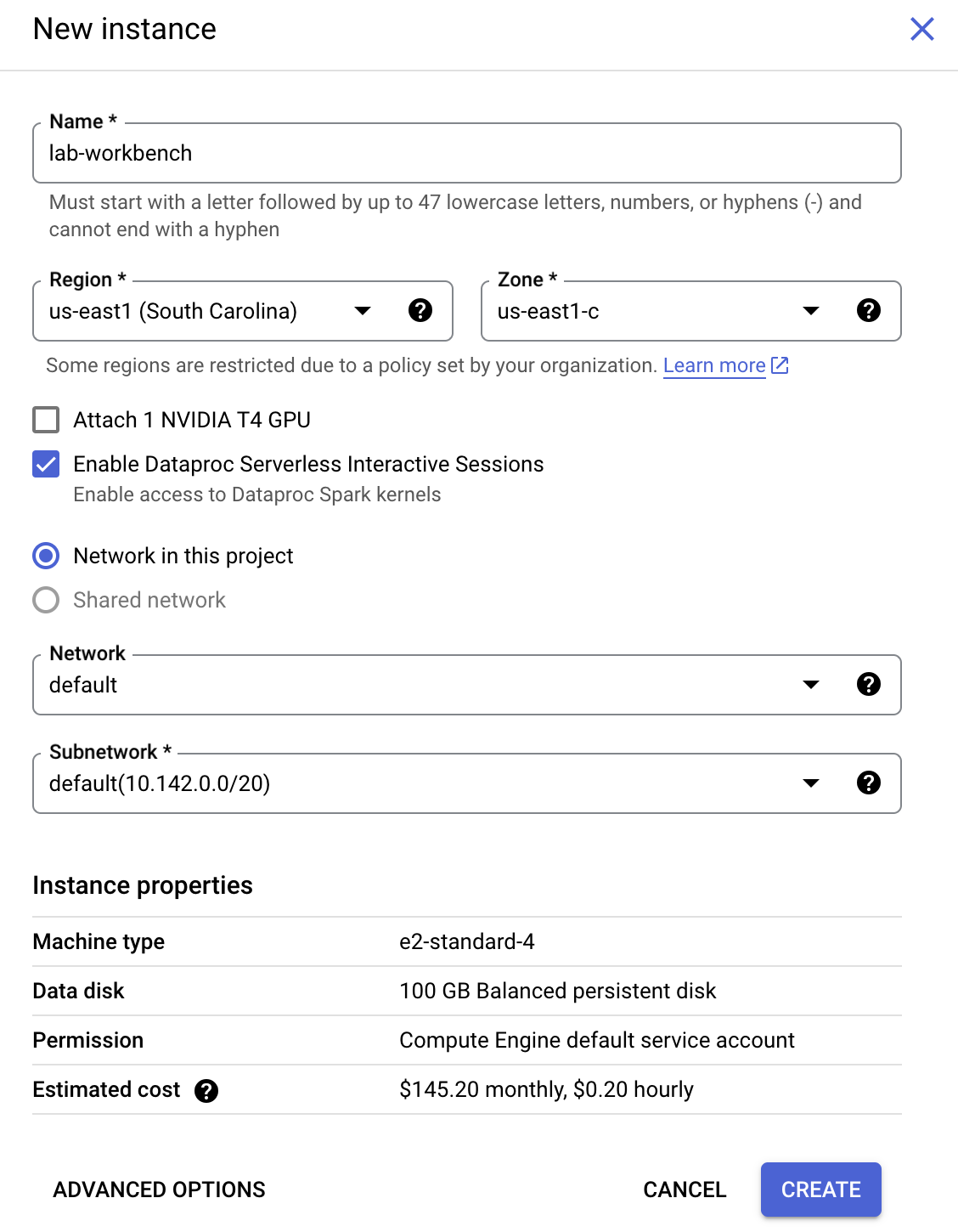
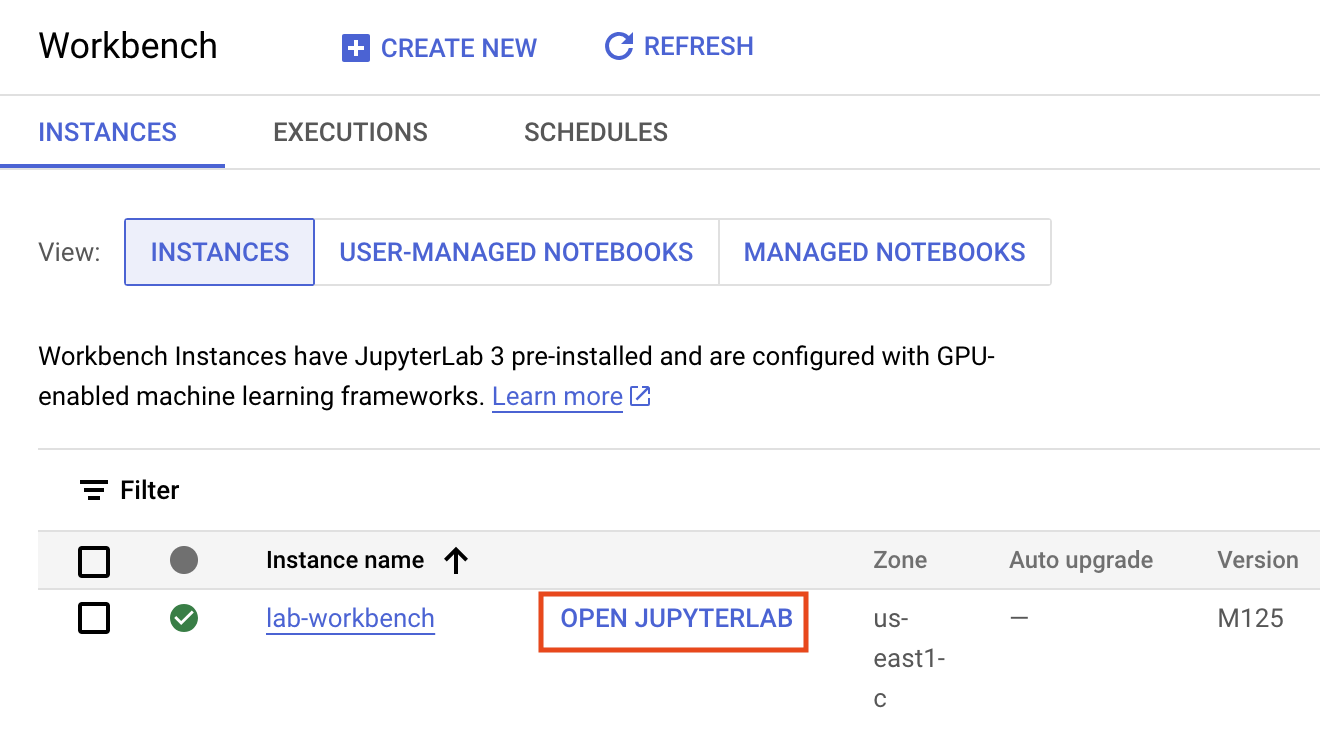
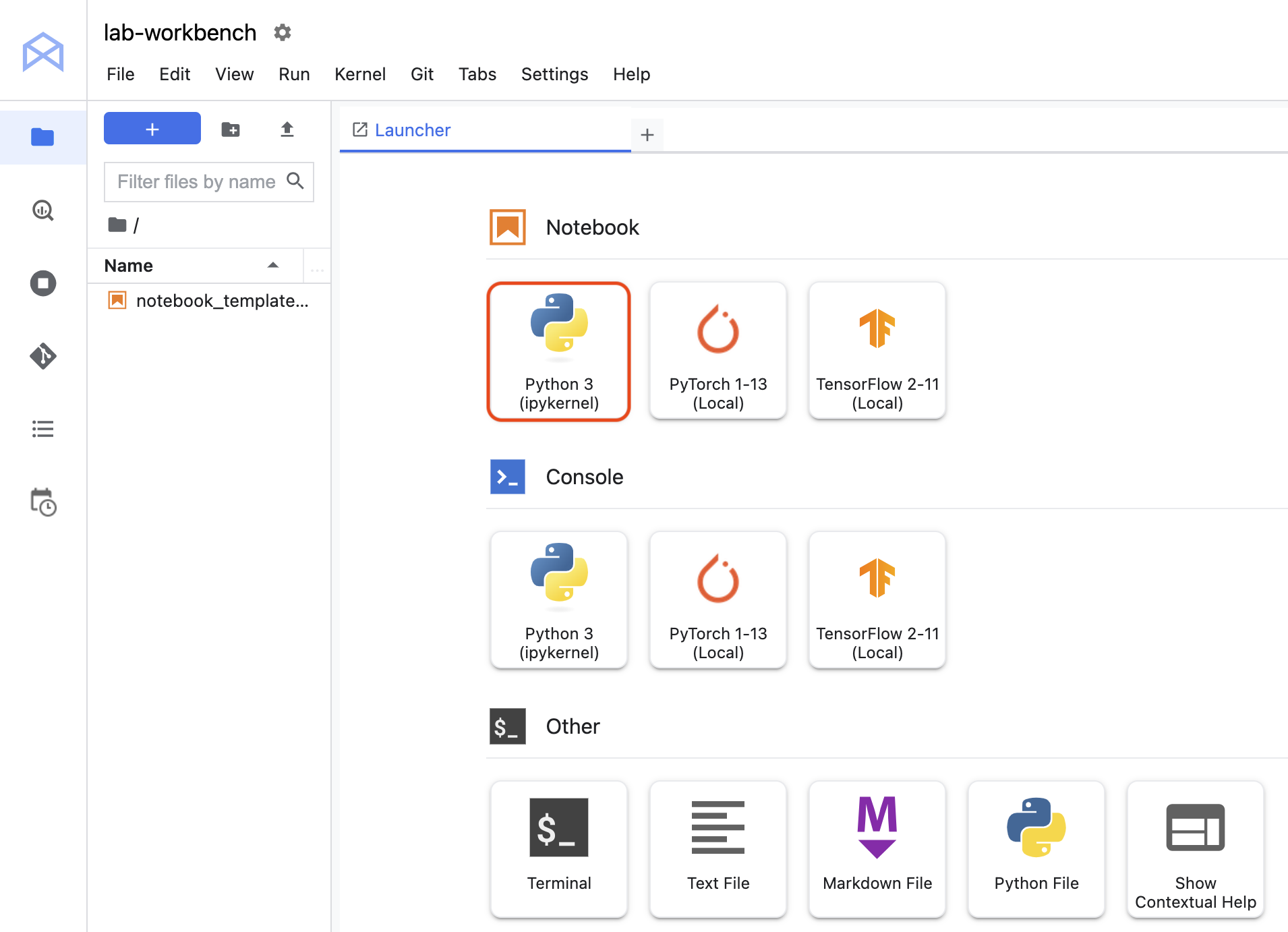
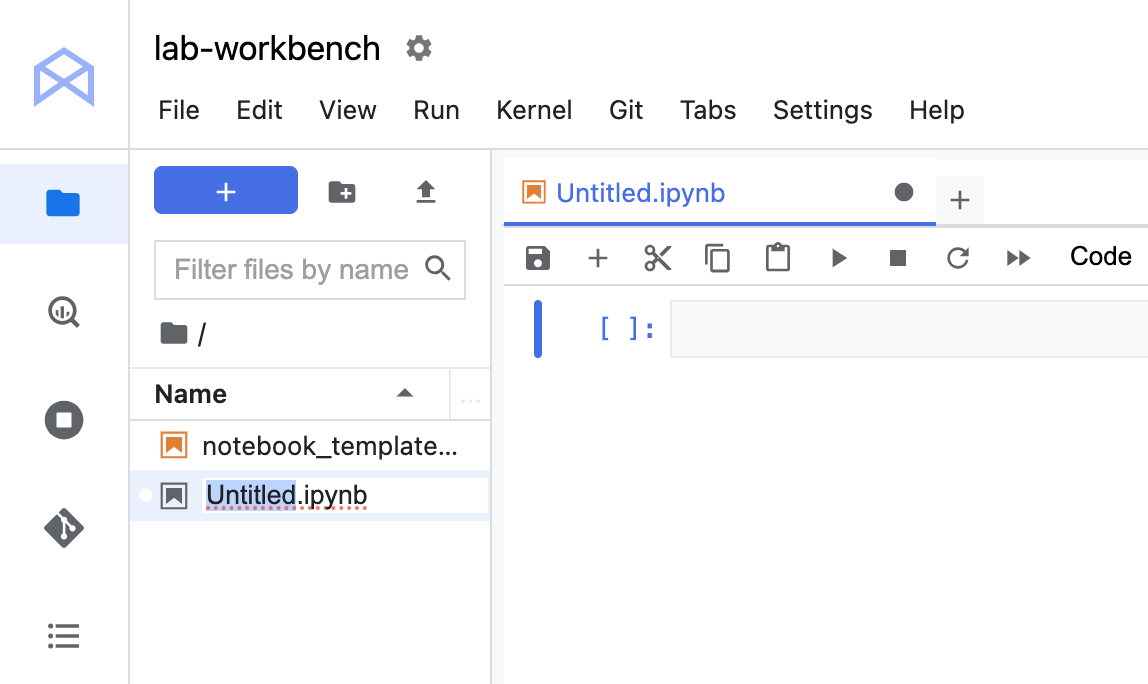
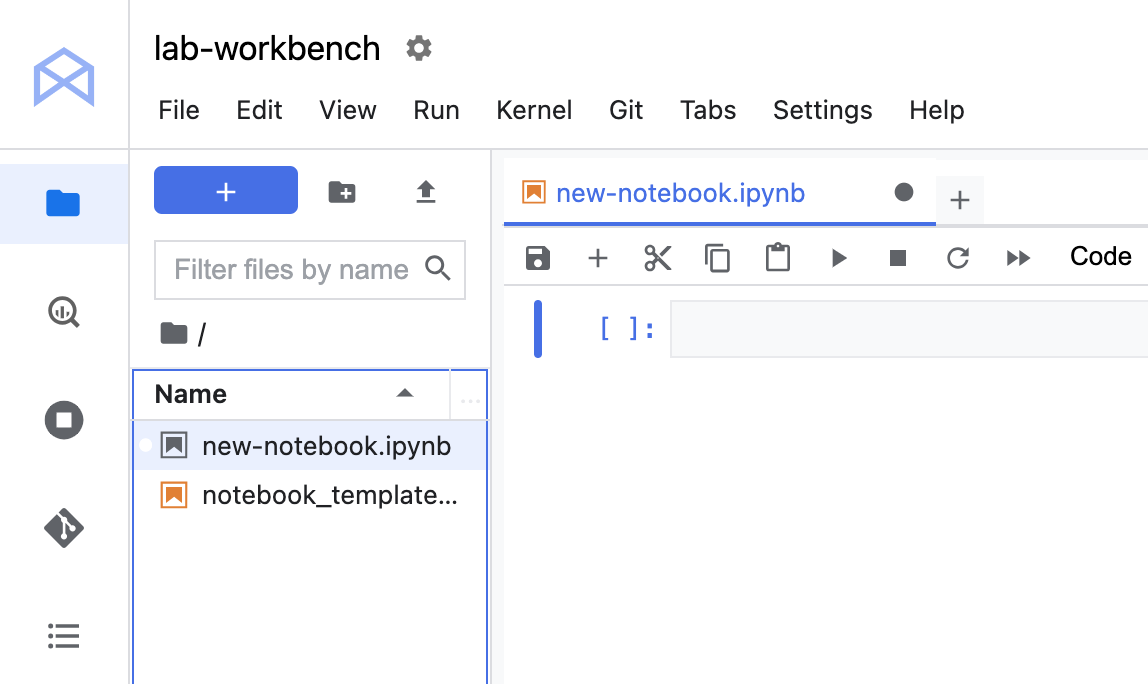
Create a Workbench Instance Notebook.
Create SQL statements to evaluate the model
Extract temporal features
Perform a feature cross on temporal features
Apply ML.FEATURE_CROSS to categorical features
Create a Euclidan feature column
Feature cross coordinate features
Apply the BUCKETIZE function
Apply the TRANSFORM clause and L2 Regularization
Evaluate the model using ML.PREDICT
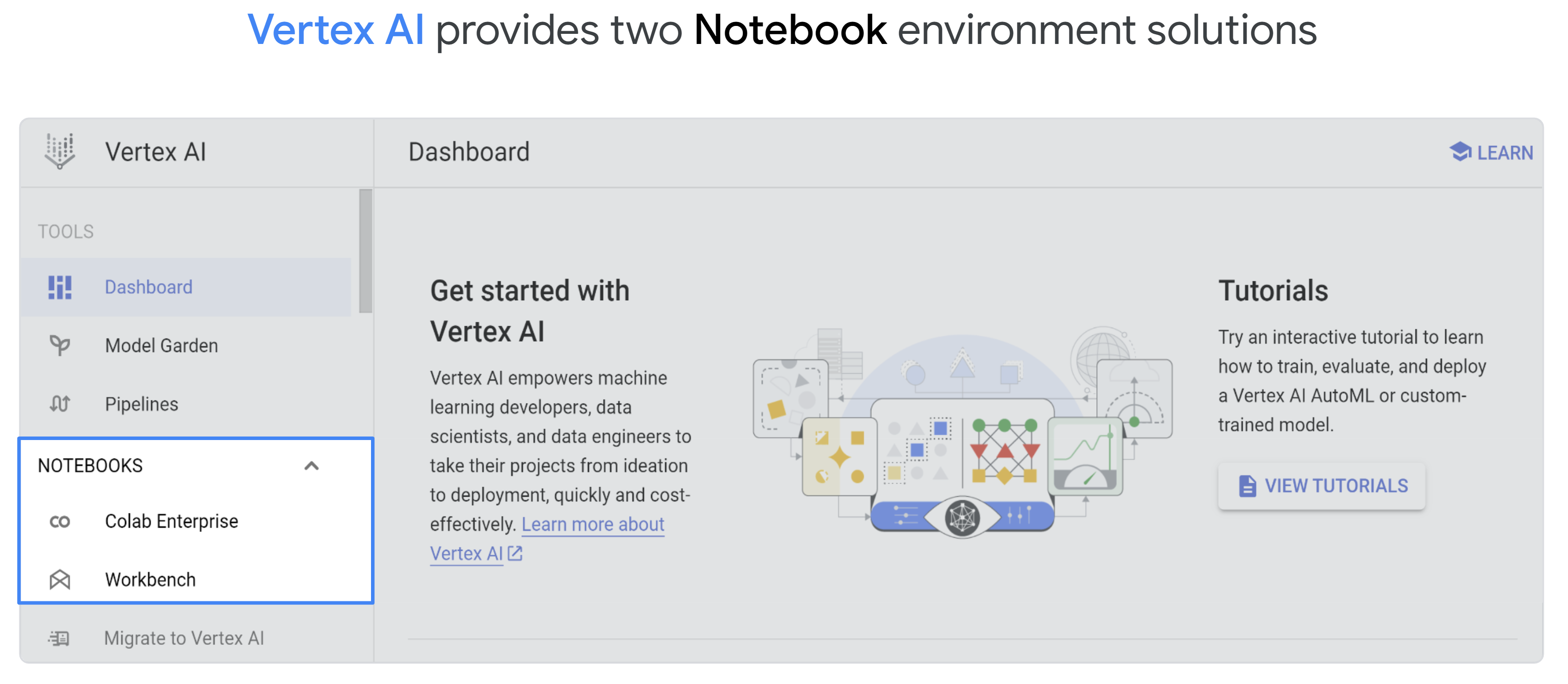
Vertex AI offers two Notebook Solutions, Workbench and Colab Enterprise.
Workbench
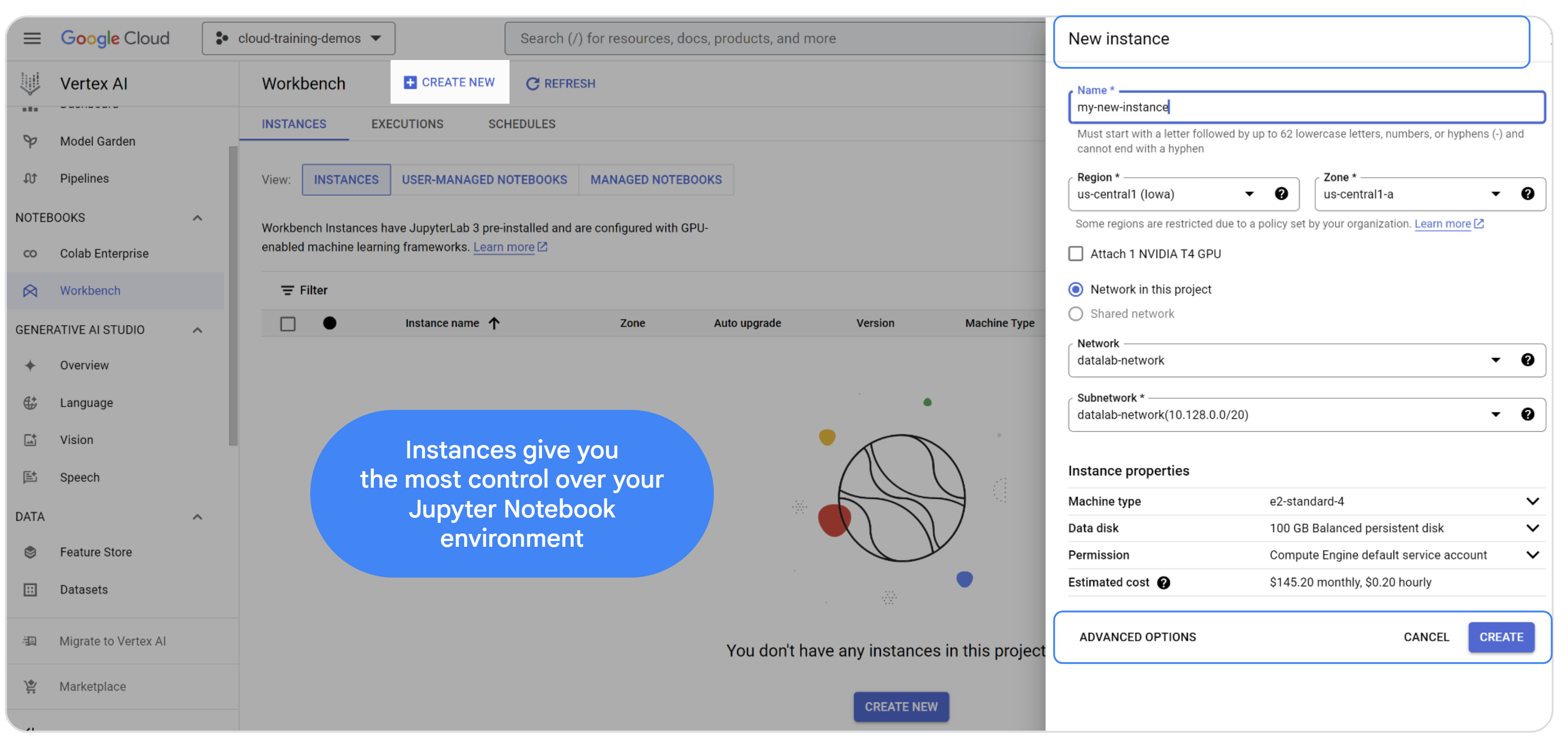
Vertex AI Workbench is a good option for projects that prioritize control and customizability. It’s great for complex projects spanning multiple files, with complex dependencies. It’s also a good choice for a data scientist who is transitioning to the cloud from a workstation or laptop.
Vertex AI Workbench Instances comes with a preinstalled suite of deep learning packages, including support for the TensorFlow and PyTorch frameworks.
Setup
For each lab, you get a new Google Cloud project and set of resources for a fixed time at no cost.
Sign in to Google Skills using an incognito window.
Note the lab's access time (for example, 1:15:00), and make sure you can finish within that time.
There is no pause feature. You can restart if needed, but you have to start at the beginning.
When ready, click Start lab.
Note your lab credentials (Username and Password). You will use them to sign in to the Google Cloud Console.
Click Open Google Console.
Click Use another account and copy/paste credentials for this lab into the prompts.
If you use other credentials, you'll receive errors or incur charges.
Accept the terms and skip the recovery resource page.
Task 1. Enable APIs
On the Navigation menu (), click APIs & services.
Scroll down and confirm that your APIs are enabled.
If an API is missing, click ENABLE APIS AND SERVICES at the top, search for the API by name, and enable it for your project.
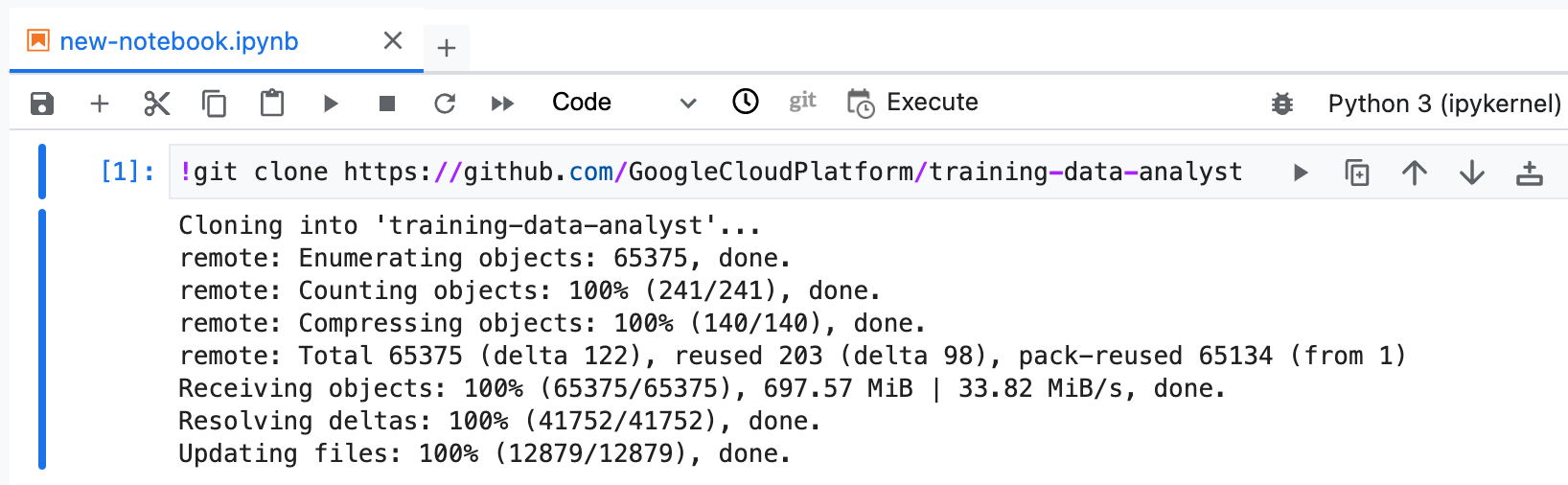
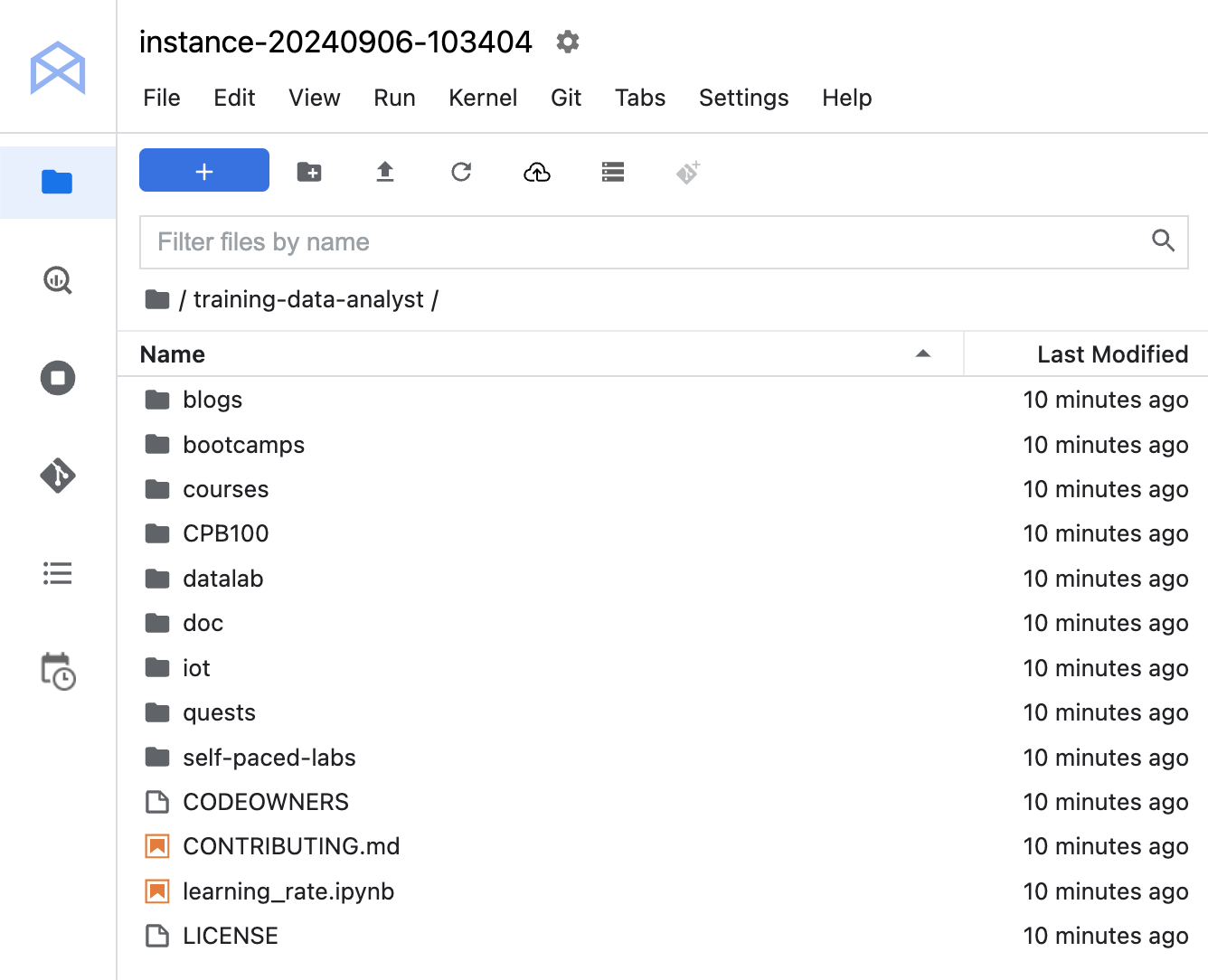
Confirm that you have cloned the repository. Double-click on the training-data-analyst directory and ensure that you can see its contents.
Click Check my progress to verify the objective.
Clone a course repo within your JupyterLab interface
Task 4. Perform advanced Feature Engineering in BigQuery ML
Duration is 60 min
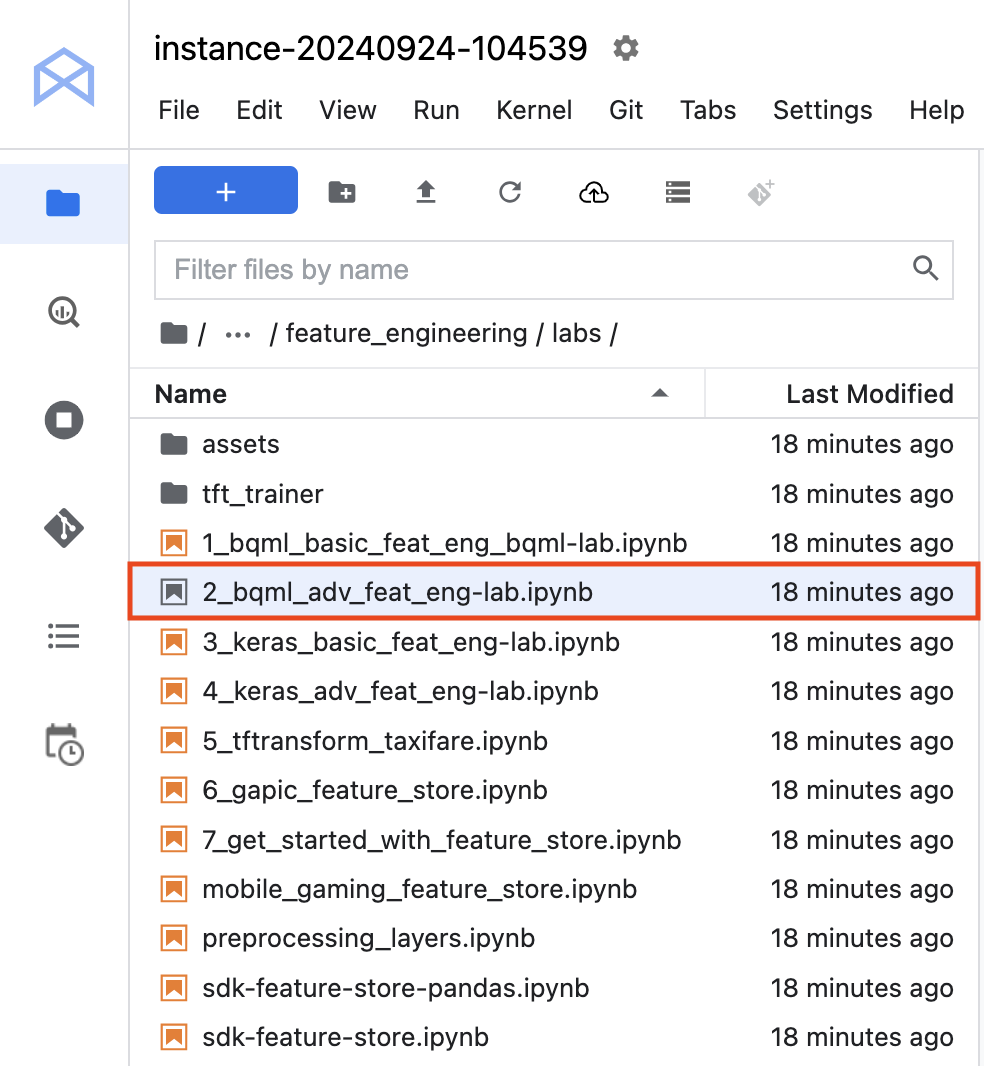
In the notebook interface, navigate to training-data-analyst > courses > machine_learning > deepdive2 > feature_engineering > labs and opening 2_bqml_adv_feat_eng-lab.ipynb.
A pop-up will appear for you to select a kernel. Choose the TensorFlow 2.11 (Local) kernel from the options.
In the notebook interface, click on Edit > Clear All Outputs (click on Edit, then in the drop-down menu, select Clear All Outputs).
Carefully read through the notebook instructions and fill in lines marked with #TODO where you need to complete the code.
Click Check my progress to verify the objective.
Perform advanced Feature Engineering in BigQuery ML
End your lab
When you have completed your lab, click End Lab. Google Skills removes the resources you’ve used and cleans the account for you.
You will be given an opportunity to rate the lab experience. Select the applicable number of stars, type a comment, and then click Submit.
The number of stars indicates the following:
1 star = Very dissatisfied
2 stars = Dissatisfied
3 stars = Neutral
4 stars = Satisfied
5 stars = Very satisfied
You can close the dialog box if you don't want to provide feedback.
For feedback, suggestions, or corrections, please use the Support tab.
Copyright 2026 Google LLC All rights reserved. Google and the Google logo are trademarks of Google LLC. All other company and product names may be trademarks of the respective companies with which they are associated.
Labs erstellen ein Google Cloud-Projekt und Ressourcen für einen bestimmten Zeitraum
Labs haben ein Zeitlimit und keine Pausenfunktion. Wenn Sie das Lab beenden, müssen Sie von vorne beginnen.
Klicken Sie links oben auf dem Bildschirm auf Lab starten, um zu beginnen
Privates Surfen verwenden
Kopieren Sie den bereitgestellten Nutzernamen und das Passwort für das Lab
Klicken Sie im privaten Modus auf Konsole öffnen
In der Konsole anmelden
Melden Sie sich mit Ihren Lab-Anmeldedaten an. Wenn Sie andere Anmeldedaten verwenden, kann dies zu Fehlern führen oder es fallen Kosten an.
Akzeptieren Sie die Nutzungsbedingungen und überspringen Sie die Seite zur Wiederherstellung der Ressourcen
Klicken Sie erst auf Lab beenden, wenn Sie das Lab abgeschlossen haben oder es neu starten möchten. Andernfalls werden Ihre bisherige Arbeit und das Projekt gelöscht.
Diese Inhalte sind derzeit nicht verfügbar
Bei Verfügbarkeit des Labs benachrichtigen wir Sie per E-Mail
Sehr gut!
Bei Verfügbarkeit kontaktieren wir Sie per E-Mail
Es ist immer nur ein Lab möglich
Bestätigen Sie, dass Sie alle vorhandenen Labs beenden und dieses Lab starten möchten
Privates Surfen für das Lab verwenden
Am besten führen Sie dieses Lab in einem Inkognito- oder privaten Browserfenster aus. So vermeiden Sie Konflikte zwischen Ihrem privaten Konto und dem Teilnehmerkonto, die zusätzliche Kosten für Ihr privates Konto verursachen könnten.
In this lab, you will perform feature crosses and other advanced steps to improve the model performance.


 ), click APIs & services.
 Create New.